
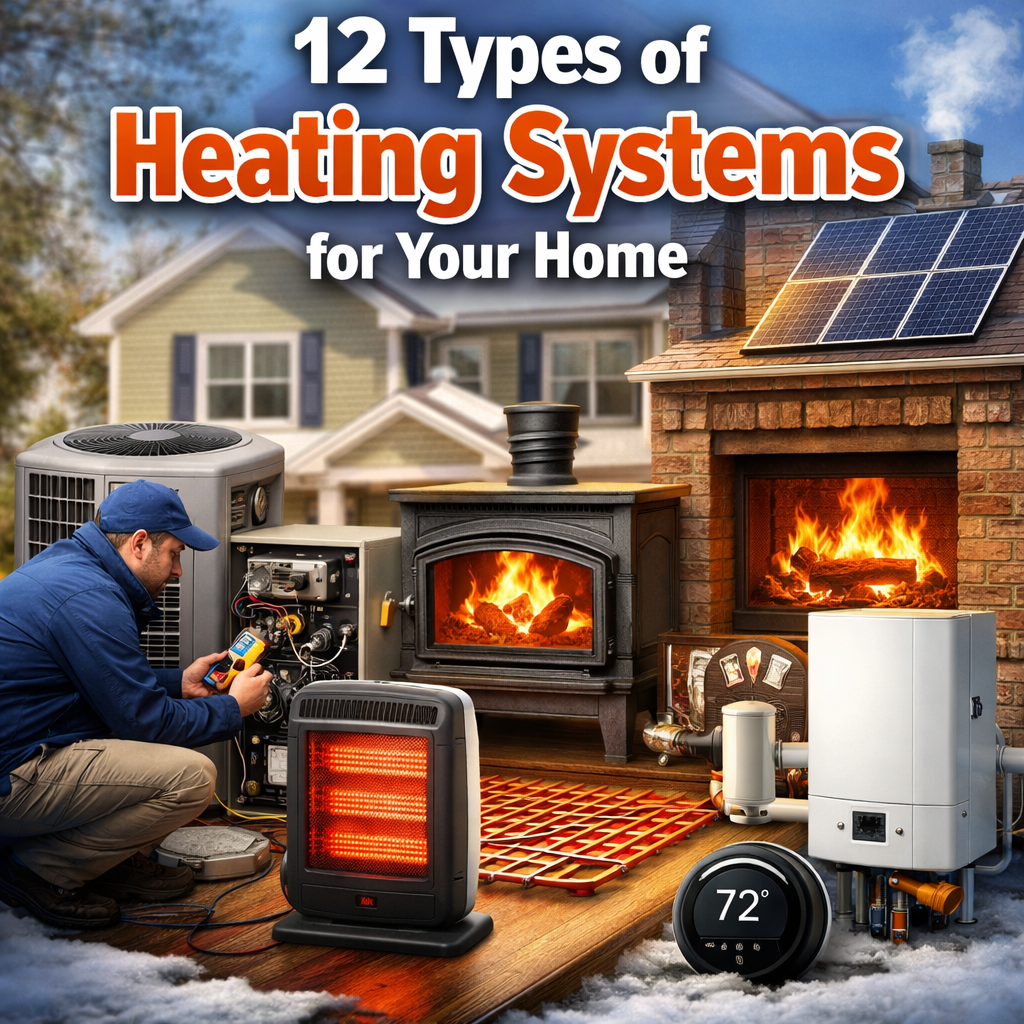
12 Types of Heating Systems for Your Home
Choosing the right heating system for your home is not just about staying warm it directly impacts comfort, energy usage, long-term costs, and even resale value. With so many options available today, understanding how different heating systems work can help you decide what fits your home, climate, and budget best. Below, we break down 12 common types of home heating systems, how they operate, and where each one makes the most sense.
1. Furnaces
Furnaces are one of the most widely used heating systems in residential homes. They work by heating air to a temperature set on your thermostat and distributing that warm air through ductwork using a fan. Furnaces can run on electricity, natural gas, oil, or propane, making them versatile for different regions.
While gas furnaces are often considered among the most efficient home heating systems, electric furnaces can be easier to install and maintain. Like any forced-air system, furnaces may eventually require home heating system repair, especially for components like blowers, heat exchangers, or ignition systems.
2. Boilers
Boilers are an older but still effective heating solution, particularly common in older homes. Instead of heating air, boilers heat water or produce steam, which is then circulated through radiators or baseboard units. This makes them part of what’s known as hydronic heating.
Boilers can operate on natural gas, oil, electricity, propane, or even biodiesel. They tend to deliver consistent, comfortable heat, though the cost of home heating systems using boilers can be higher due to installation and maintenance complexity.
3. In-Floor Radiant Heating
In-floor radiant heating systems warm your home from the ground up. Tubing or electric heating elements are installed beneath the floor, allowing heat to radiate evenly across the space. These systems can be powered by electricity or hot water.
Because heat rises naturally, radiant floors eliminate cold spots and are considered an energy efficient home heating system, especially in well-insulated homes. While installation costs are higher upfront, operating costs can be lower over time.
4. Heat Pumps
Heat pumps are unique because they provide both heating and cooling. Instead of generating heat, they move heat from one place to another using electricity. During winter, they extract heat from the outdoor air (or ground) and move it indoors.
Geothermal heat pumps take this concept further by using stable underground temperatures. Although they come with a higher installation cost, they are often considered one of the most efficient home heating systems available today.
5. Electric Space Heaters
Electric space heaters are among the simplest electric heat systems for homes. They convert electricity directly into heat and are best suited for small rooms or targeted heating rather than whole-home use.
Infrared heaters warm people and objects directly, while convection heaters warm the air and circulate it throughout the room. While affordable upfront, relying on space heaters for full-home heating can significantly increase energy costs.
6. Active Solar Heating Systems
Active solar heating systems use solar panels to capture energy from the sun and convert it into heat. This energy is used to warm air or liquid, which is then circulated throughout the home.
These systems are environmentally friendly and can reduce long-term energy costs, but they are more complex and dependent on sunlight availability. Installation costs can be higher, making them a long-term investment rather than a quick solution.
7. Hybrid Heating Systems
Hybrid heating systems combine two technologies: a heat pump for everyday efficiency and a furnace for extreme cold conditions. This setup is ideal for regions with fluctuating temperatures.
By automatically switching between systems, hybrids reduce wear and tear, improve efficiency, and help control the cost of home heating systems throughout the year.
8. Baseboard Heaters
Baseboard heaters are typically installed along the base of walls and use convection to heat a room. Air is warmed by electric coils and naturally rises, pulling cooler air in to repeat the cycle.
Although baseboard heaters are technically 100% efficient at converting electricity into heat, they can be expensive to operate compared to other options, especially in colder climates.
9. Ductless Mini-Splits
Ductless mini-splits provide heating and cooling without the need for ductwork. Each indoor air handler connects to an outdoor compressor, allowing for zone-based temperature control.
They are efficient, flexible, and a popular option for home additions or retrofits. However, they may not match the full heating capacity of traditional central systems in very cold climates.
10. Fireplaces
Fireplaces add warmth and ambiance but are rarely effective as a primary heating source. They can be powered by gas, electricity, or wood, each with its own installation and insulation requirements.
While fireplaces are great for heating communal areas, their heating range is limited, and most heat stays localized near the unit.
11. Wood-Burning Stoves
Wood-burning stoves function similarly to fireplaces but are enclosed in metal units with glass doors. They provide radiant heat and are often visually appealing.
Despite their charm, wood-burning stoves are not suitable for whole-house heating and require regular maintenance, fuel storage, and proper ventilation.
12. Gravity Furnaces
Gravity furnaces are considered old heating systems for homes, dating back to the 1800s. These systems rely on the natural rise of warm air rather than fans or blowers.
While gravity furnaces have few moving parts, they are inefficient by modern standards. Homeowners with these systems are often advised to replace them due to high operating costs and limited control.
Final Thoughts
With so many heating options available, choosing the right system depends on your home’s layout, climate, energy goals, and long-term budget. Whether you’re dealing with old heating systems for homes, evaluating the cost of home heating systems, or upgrading to a more energy efficient home heating system, understanding how each system works is the first step toward making a smart decision.
Just as important as choosing the right system is having reliable support when things go wrong. Many heating systems, especially furnaces, heat pumps, boilers, and ductless systems require professional installation, routine maintenance, and timely home heating system repair to operate safely and efficiently. Ignoring small issues can quickly lead to higher energy bills or system failure during peak winter months.
That’s where repairHVACnow comes in. As experienced HVAC technician providers serving homeowners across the U.S., repairHVACnow helps diagnose issues, repair existing systems, and guide homeowners toward the most efficient home heating system for their needs. Whether it’s servicing electric heat systems, upgrading outdated equipment, or restoring heat when your system fails, having qualified professionals on your side ensures comfort, safety, and peace of mind year-round.