
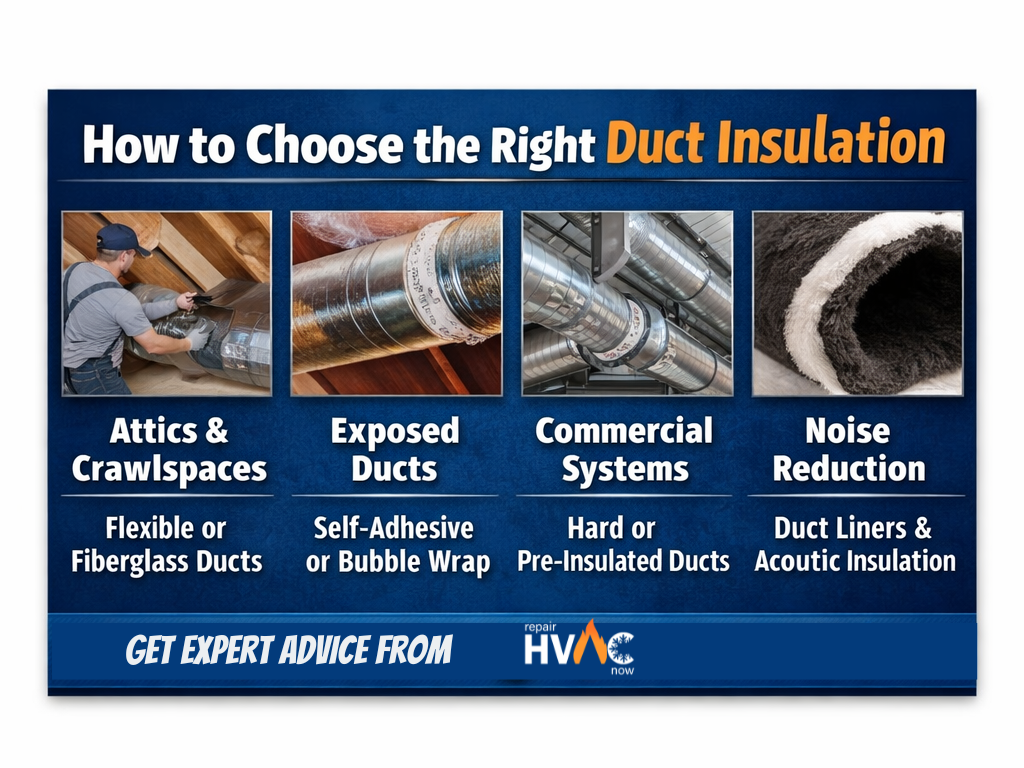
Types of Duct Insulation: Materials, Pros, and Cons
Proper duct insulation is essential for maintaining HVAC efficiency, reducing energy costs, and minimizing noise. Choosing the right type of duct insulating material depends on your duct type, location, and performance needs. Here’s a detailed guide to common duct insulation types, with their advantages and disadvantages.
1. Fiberglass Duct Insulation
Material : Made from fiberglass insulation in air ducts, available as fiberglass duct insulation wrap or air duct fiberglass insulation.
Applications: Both interior duct insulation and exterior duct insulation, often as duct internal insulation or duct liner insulation.
Pros:
- High R-value for thermal efficiency
- Reduces noise in duct sound insulation
- Affordable and widely available
Cons:
- Can irritate skin and lungs during installation
- Must be protected from moisture
2. Flexible Insulated Ducts
Description: Pre-insulated flexible ducts like 8 inch insulated flexible duct, 12 inch flexible insulated duct, or 4 insulated ducting.
Applications: Residential or tight spaces where rigid ducts aren’t feasible.
Pros:
- Easy to install
- Reduces energy loss
- Lightweight and adaptable to curves
Cons:
- Lower R-value compared to rigid insulation
- Can sag or compress over time
3. Metal and Spiral Duct Insulation
Description: Insulation for metal duct insulation, spiral duct insulation, and insulated square duct.
Applications: Commercial HVAC systems, often with pre insulated ducts.
Pros:
- Durable and long-lasting
- High thermal resistance
- Suitable for large-scale systems
Cons:
- Requires more labor to install
- Higher initial cost
4. Bubble and Wrap Insulation
Description: Lightweight options like duct bubble wrap insulation, bubble duct wrap insulation, and duct insulation wrap.
Applications: Outdoor duct insulation, limited spaces, or temporary protection.
Pros:
- Easy to handle and cut to size
- Good for surface protection and heat reflection
Cons:
- Lower R-value than fiberglass
- Less durable for long-term use
5. Self-Adhesive and Specialty Insulation
Description: Includes self adhesive duct insulation and options like air duct sound insulation.
Applications: Exposed ducts where quick installation and noise reduction are needed.
Pros:
- Simple to install
- Combines insulation with sound reduction
Cons:
- Limited thickness
- Can be more expensive per square foot
Tips for Choosing Duct Insulation
- Match the insulation type with duct size: e.g., 12 inch insulated flexible duct, insulated 6 ducting, or insulated 4 inch ducting.
- Consider location: interior vs exterior duct insulation.
- Prioritize certified materials and avoid outdated options like asbestos duct insulation.
For attics, consider insulating ducts in attic to reduce heat loss.
Conclusion:
Investing in the right duct insulating solution—whether fiberglass duct wrap insulation, spiral duct insulation, or insulated round duct boosts HVAC efficiency, improves comfort, and saves energy. Evaluate your duct type, space constraints, and noise requirements to choose the best option.
Other Blog Posts
Furnace Filter Mistakes
Furnace Installation & Maintenance
Common Air Duct Problems
Water Heater Leaks
Auxiliary Heat Explained
Furnace Size Guide