How Often Should You Change Your HVAC Filter? Here’s What Experts Say
As winter winds down across much of the Midwest and Northeast, and cooling season approaches in Southern and Western states, HVAC systems enter their lightest workload period of the year. In colder regions, extended furnace cycles often accelerate dust buildup inside filters, while Southern and Western climates face rising pollen and dust that can restrict airflow before cooling demand increases.
This seasonal transition is the smartest time to ask: how often should I change my HVAC filter? Every summer, veteran technicians respond to emergency cooling calls that trace back to one simple issue: restricted airflow from a neglected filter. What starts as reduced comfort in spring often becomes frozen coils, overheating components, or a complete system shutdown during the first heat wave.
After months of steady furnace use or mild winter cycling, filters are often loaded with dust, debris, and dry air particles. In warmer regions, spring pollen and dust storms are next. Ignoring your filter now can quietly reduce airflow before your air conditioner begins working hard again.
Veteran technicians see this pattern every year. Systems that struggled all winter often only need airflow correction before summer begins. If your home felt dusty or airflow was weak recently, call repairHVACnow for same-day service while spring scheduling availability is still flexible.
1. Recommended Frequency of HVAC Filter Changes
For most homes, standard 1-inch filters should be replaced every 30 to 90 days. Thicker 4-inch media filters may last 6 to 12 months depending on system usage and home conditions.
Unfortunately, visual inspection alone isn’t always enough because airflow restriction can occur before the filter looks completely dirty. In the field, HVAC professionals often find 1-inch filters fully restricted after just 45 days in homes with pets or heavy winter furnace use.
Here is a general HVAC Filter Change Frequency guide:
| Home / Filter Type | Recommended Replacement Interval |
| 1-inch fiberglass filter | Every 30 days |
| 1-inch pleated filter | Every 60 to 90 days |
| Homes with pets | Every 30 to 60 days |
| Allergy-sensitive households | Monthly |
| Vacation homes | Check before seasonal restart |
The U.S. Department of Energy confirms that replacing a clogged filter improves airflow and reduces energy use because the system does not have to work as hard.
If you are still wondering how often should you change your HVAC filter, the safest answer for most homeowners entering spring is simple: start the season with a clean filter.
Remove your current filter and hold it up to the light to inspect for blockage. If airflow is visibly blocked, replace it.
2. Signs Your Filter Needs Replacement
Homeowners often notice subtle warning signs before system performance declines.
| What You Notice | Likely Cause | What To Do |
| Weak airflow | Clogged filter | Change HVAC filter |
| Rising utility bills | Reduced HVAC System Efficiency | Replace filter |
| Dust accumulation | Poor filtration | Upgrade filter |
| Frequent cycling | Restricted airflow | Schedule inspection |
When airflow is restricted, blower motors work harder. Over time, that strain can reduce equipment lifespan.
The American Society of Heating, Refrigerating and Air Conditioning Engineers explains that maintaining proper airflow is essential for safe and efficient system operation.
If you are seeing multiple symptoms, schedule your HVAC inspection today before summer demand increases service wait times.
3. Effects of a Dirty HVAC Filter
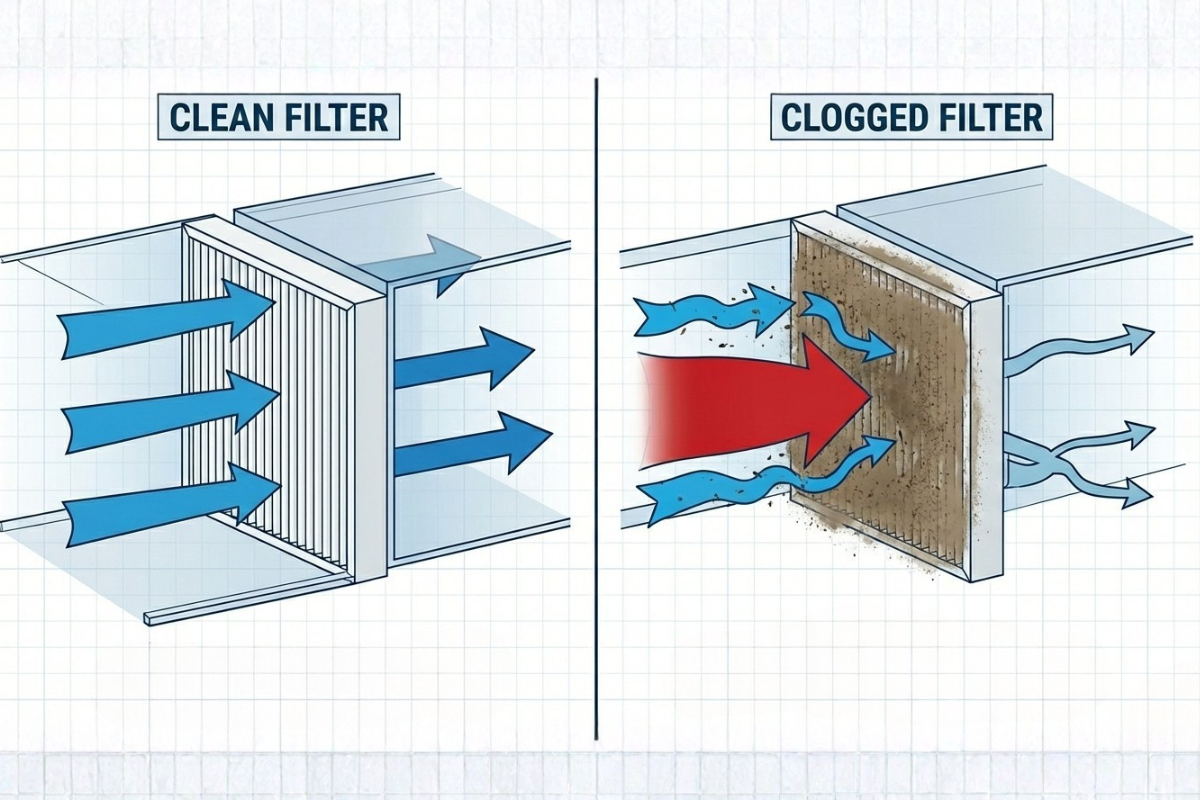
A clogged filter impacts more than comfort.
The Environmental Protection Agency notes that indoor air can contain higher concentrations of pollutants than outdoor air, which directly affects respiratory health.
When filters clog:
- Airborne particles circulate more freely
- Evaporator coils freeze during cooling
- Furnaces may overheat during heating
- Internal system pressure increases
This is especially important during spring allergy season across many U.S. regions. Delaying replacement now can lead to reduced cooling output when summer temperatures rise.
Replace your filter before switching fully into cooling mode.
4. Choosing the Right Filter
Not all filters provide the same performance.
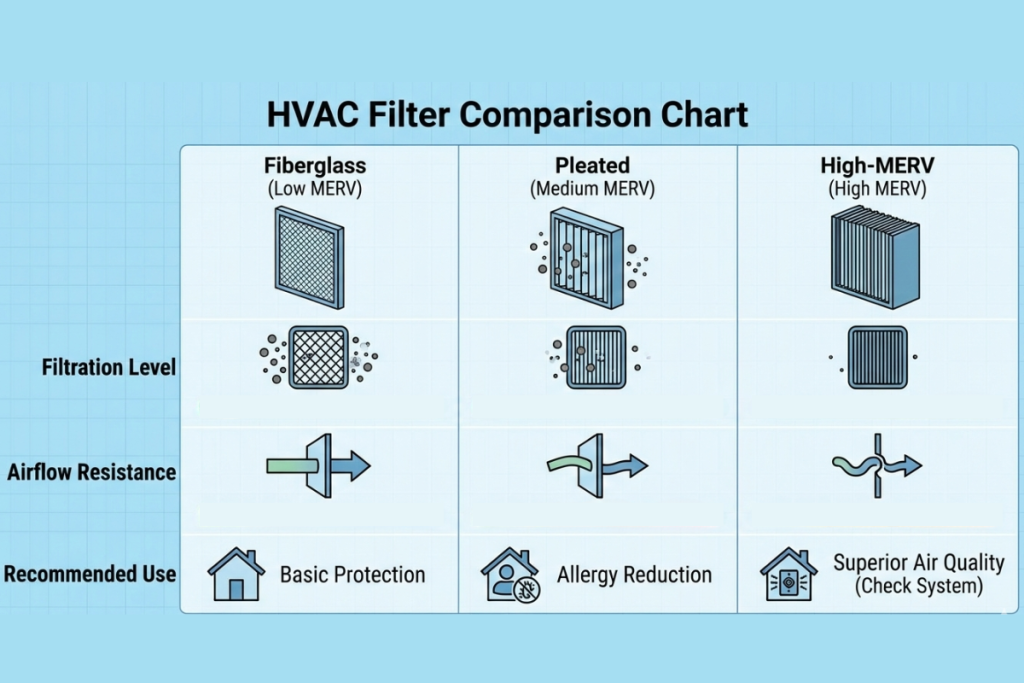
Understanding common HVAC filter types helps you make safer decisions:
- Fiberglass filters: Basic filtration
- Pleated filters: Better dust and allergen capture
- High-MERV filters: Superior filtration but higher airflow resistance
MERV stands for Minimum Efficiency Reporting Value. Higher ratings capture smaller particles, but may reduce airflow if your system is not designed for them. Upgrading filtration can help improve indoor air quality, especially during pollen-heavy months.
Confirm your system’s recommended MERV rating before upgrading.
5. Tips for Proper HVAC Maintenance
Air filtration is only one part of seasonal air filter maintenance.
Spring is ideal for preventative care because:
- Heating demand has dropped
- Cooling demand has not peaked
- Scheduling is more flexible
Helpful HVAC maintenance tips:
- Check filters monthly
- Write install date on frame
- Keep return vents clear
- Schedule seasonal inspection
During a professional visit, technicians inspect blower performance, measure airflow, and verify overall system condition. If it has been more than a year since your last inspection, contact us for reliable, expert AC repair or book your seasonal maintenance appointment now.
6. Enhancing Indoor Air Quality
Spring pollen, dust, and regional climate conditions increase airborne contaminants in many homes.
To better improve indoor air quality:
- Replace filters regularly
- Control indoor humidity
- Inspect ductwork
- Consider whole-home purification
The EPA confirms filtration and ventilation improvements reduce airborne pollutant exposure, so if allergy symptoms worsen indoors, your system may require airflow evaluation.
Be sure to have your system checked before peak allergy season.
7. Cost of Replacing HVAC Filters
The cost of replacement is small compared to major repairs.
Typical pricing:
- Standard 1-inch filters cost anywhere between $10 to $30
- 4-inch media filters: $40 to $100
The Department of Energy confirms that restricted airflow increases energy use and operational cost.
Ignoring filter replacement can contribute to:
- Reduced HVAC system efficiency
- Blower motor strain
- Higher cooling costs
Preventative maintenance costs far less than emergency repair during peak summer heat, so be sure to replace your filter now to protect efficiency before heavy cooling begins. HVAC professionals routinely see blower motors fail or coils freeze simply because a $15 filter wasn’t replaced in time. Small maintenance decisions often determine whether your system runs smoothly or fails when you need it most.
8. DIY vs Professional Filter Changes
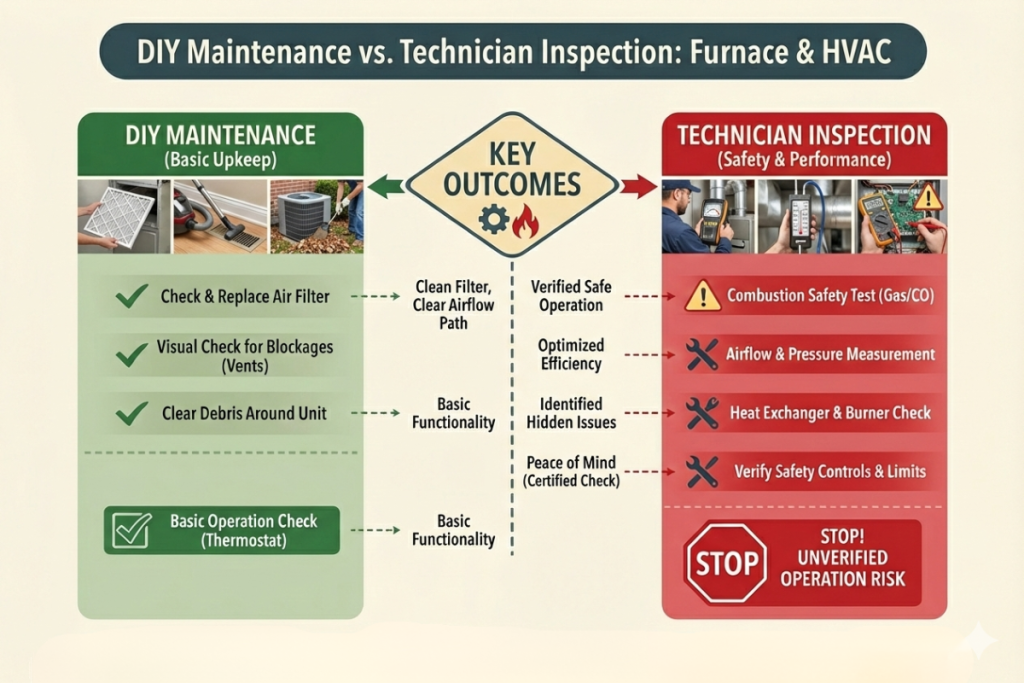
Basic furnace filter replacement is usually safe if the filter is easily accessible.
DIY-safe actions:
- Remove old filter
- Confirm correct size
- Install replacement with proper airflow direction
Professional evaluation is recommended if you notice:
- Repeated overheating
- Frozen coils
- Electrical breaker trips
- Persistent airflow problems
OSHA emphasizes the importance of proper ventilation to maintain safe indoor environments. That is why licensed, trained, and certified technicians test static pressure, inspect blower performance, and evaluate overall airflow to protect system safety.
If problems persist after you have replaced the filter, schedule professional evaluation immediately.
What Happens When You Call repairHVACnow
Spring is the most strategic time to act before service demand spikes.
When you contact repairHVACnow:
- You request an appointment online or by phone
- Available service times are confirmed
- A licensed, trained, certified technician arrives
- Technician inspects filtration, airflow, and system performance
- The technician explains findings clearly before any work begins
- You approve service and restore comfort safely
Clean filters improve comfort, protect family health, and extend equipment life, especially as summer temperatures rise quickly. Waiting until the first heat wave increases the risk of breakdowns and emergency cooling repairs. During peak summer demand, service slots fill quickly, and wait times increase significantly.
Request your appointment now and let repairHVACnow prepare your system for a smooth, efficient, and comfortable season ahead.