
50 MPH Winds in Central Indiana Can Damage Your HVAC
Strong winds and heavy rain are moving through central Indiana, and Indianapolis-area homeowners may be dealing with more than just rough weather. Fallen branches and a power outage usually get the most attention, but your HVAC system can take a hit too.
If you live in central Indiana, these 50 mph wind gusts are not just something to watch from the window. They can blow debris into your outdoor unit, trigger electrical issues, and leave families wondering why their AC or heat suddenly is not working the way it should.
At repairHVACnow, we help connect homeowners with local HVAC professionals when severe weather puts comfort systems at risk. If your area is under a wind advisory or a high wind warning, it is worth paying close attention to how your system responds before, during, and after the storm.
Storm Update for Central Indiana Residents
This weather report applies to central Indiana, especially communities in and around:
- Indianapolis
- Carmel
- Fishers
- Noblesville
- Greenwood
- Plainfield
- Anderson
- Muncie
Fast-moving storm lines, high wind gusts, heavy rain, and scattered service disruptions can quickly create HVAC problems at the exact time homeowners need reliable heating or cooling most.
Why High Winds Can Damage Your HVAC System
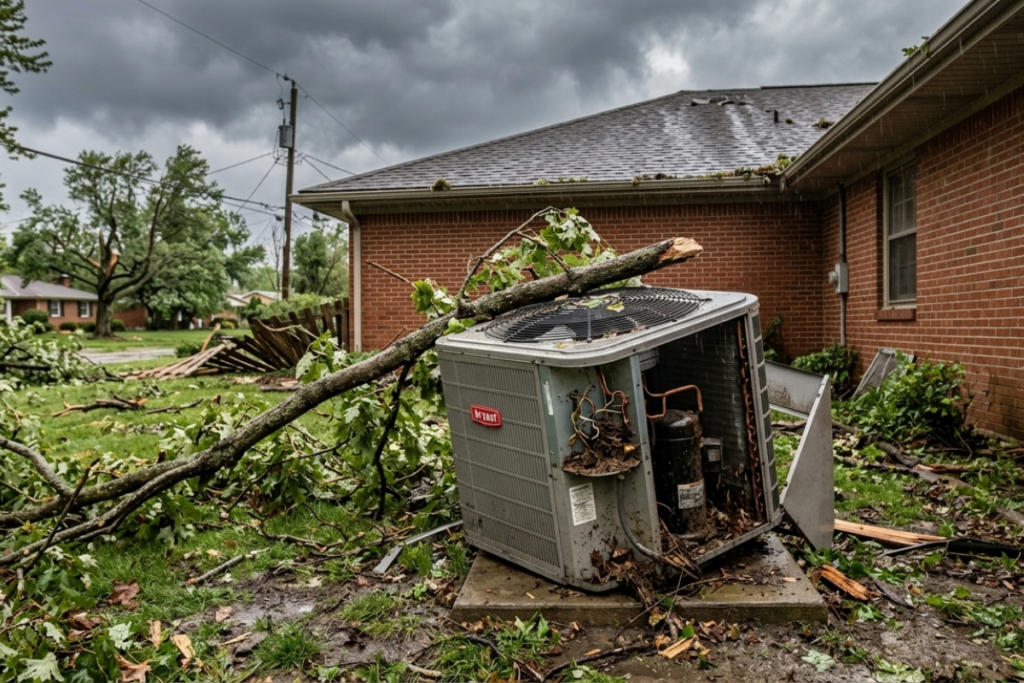
Your outdoor HVAC unit is built to sit outside, but severe weather can still do real damage fast. Strong winds can throw leaves, branches, dirt, and loose debris straight into the system, blocking airflow and damaging important parts.
The tricky part is that storm damage does not always show up right away. Some systems stop working immediately. Others keep running just long enough to make everything seem fine before problems show up later.
Signs Your HVAC System May Have Been Affected
After the storm passes, many of the first warning signs show up inside the house. Watch for:
- Warm air from vents
- Weak airflow
- Buzzing, rattling, or grinding sounds
- Thermostat issues
- Breakers tripping
- Burning smells
- Rising indoor humidity
These issues may seem minor at first, but they often point to storm-related system stress. One flying branch, one restart, or one brief power outage can be enough to create a repair problem that gets worse by the next day.
Why Power Disruptions Matter
One of the biggest hidden risks during a storm is the electrical disruption you barely notice. Even a short flicker can put stress on HVAC components like capacitors, contactors, control boards, and thermostats.
A lot of homeowners think the risk is over once the lights come back on. In reality, the system may try to restart under unstable power, and that is where extra wear begins.
What Homeowners Should Check After the Storm
Once conditions are safe, take a quick look at your system. Check the outdoor unit for branches, leaves, or wind-blown debris. Listen for unusual sounds when it starts up. Notice whether airflow feels weak or whether the home is cooling or heating more slowly than normal.
You should also check whether the breaker tripped after a flicker or power outage. Do not open the unit or try to repair it yourself. If something feels off, the safest move is a professional inspection.
When to Call for Emergency HVAC Repair
Call for immediate help if:
- The system will not start
- The breaker keeps tripping
- There is a burning smell
- The outdoor unit looks damaged
- Airflow becomes very weak
- Indoor temperatures change too quickly
- The thermostat stops responding properly
Why a Wind Advisory or High Wind Warning Matters
A wind advisory means winds are strong enough to create hazards, including flying debris and stress on outdoor equipment. A high wind warning points to even more dangerous conditions, where damage and outages become more likely.
For HVAC systems, both matter. Clean airflow, stable electricity, and physical protection are all essential for normal performance. Severe storms can disrupt all three at once.
If your system starts acting up after high winds in central Indiana, do not wait. At repairHVACnow, we help homeowners connect with local technicians for fast diagnosis and repair before a small issue turns into a much bigger one.
FAQs
Can strong winds really damage an outdoor HVAC unit?
Yes, strong winds, especially around 50 mph, can damage outdoor HVAC units. Wind can blow debris like branches, dirt, and leaves into the system, clogging airflow or damaging internal components such as the fan, condenser coil, or fins. In severe cases, impact damage can cause the unit to stop working entirely.
Why is my AC not working properly after a storm?
After a storm, your AC may struggle due to debris buildup, electrical issues from power surges, or internal component damage. Even a brief power outage can affect parts like capacitors or control boards, causing the system to run inefficiently or fail to start.
Should I turn off my HVAC system during a severe storm?
It is a good idea to turn off your HVAC system at the thermostat and breaker if you expect severe weather with high winds or lightning. This can help protect it from electrical surges and prevent damage from debris entering the system while it is running.
How do I know if my HVAC system has electrical damage after a power outage?
Common signs of electrical damage include the system not turning on, frequent breaker trips, unresponsive thermostat, or unusual noises like buzzing. If you notice any of these after a power flicker or outage, a professional inspection is recommended.
How soon should I call for HVAC repair after storm damage?
You should call for HVAC repair immediately if you notice signs like burning smells, weak airflow, strange noises, or if the system will not turn on. Even if the issue seems minor, early inspection can prevent more expensive repairs or complete system failure later.