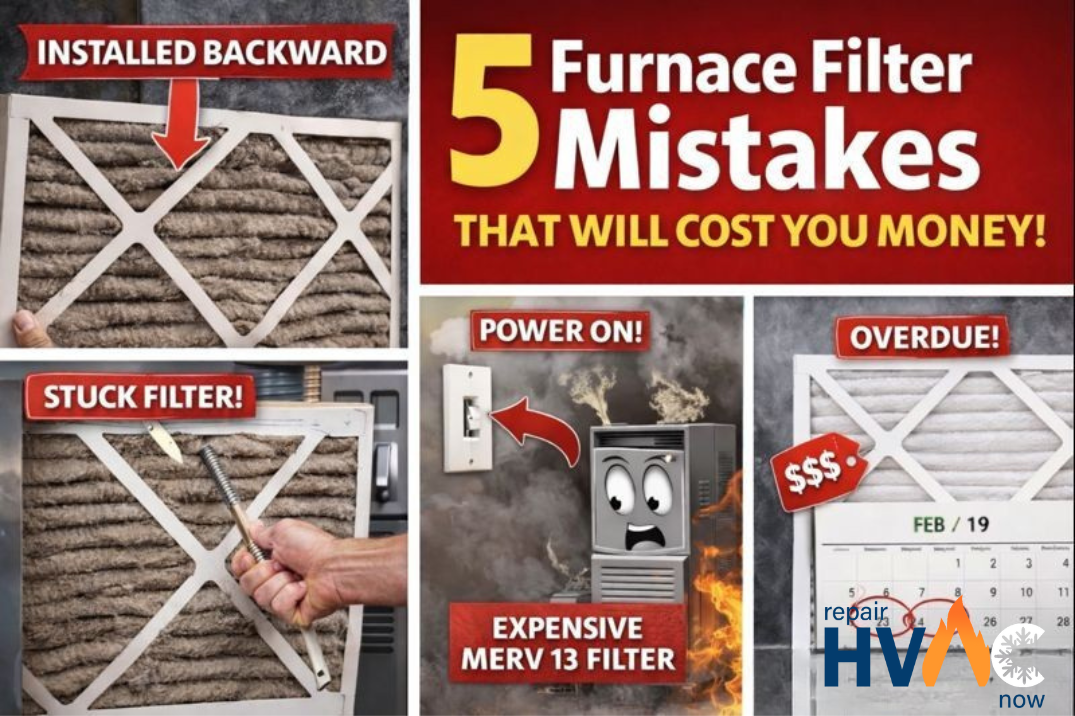
5 Furnace Filter Mistakes That Will Cost You Money!
With so many furnace filter options on the market cheap, expensive, thin, thick it’s easy to make the wrong choice. Many homeowners assume that spending more automatically means better air quality and efficiency, but that’s not always true.
After 30 years of working on furnaces, HVAC professionals see the same costly mistakes over and over again. Here are the top five furnace filter mistakes that can quietly increase your energy bills and even damage your furnace.
Top Five Furnace Filter Mistakes
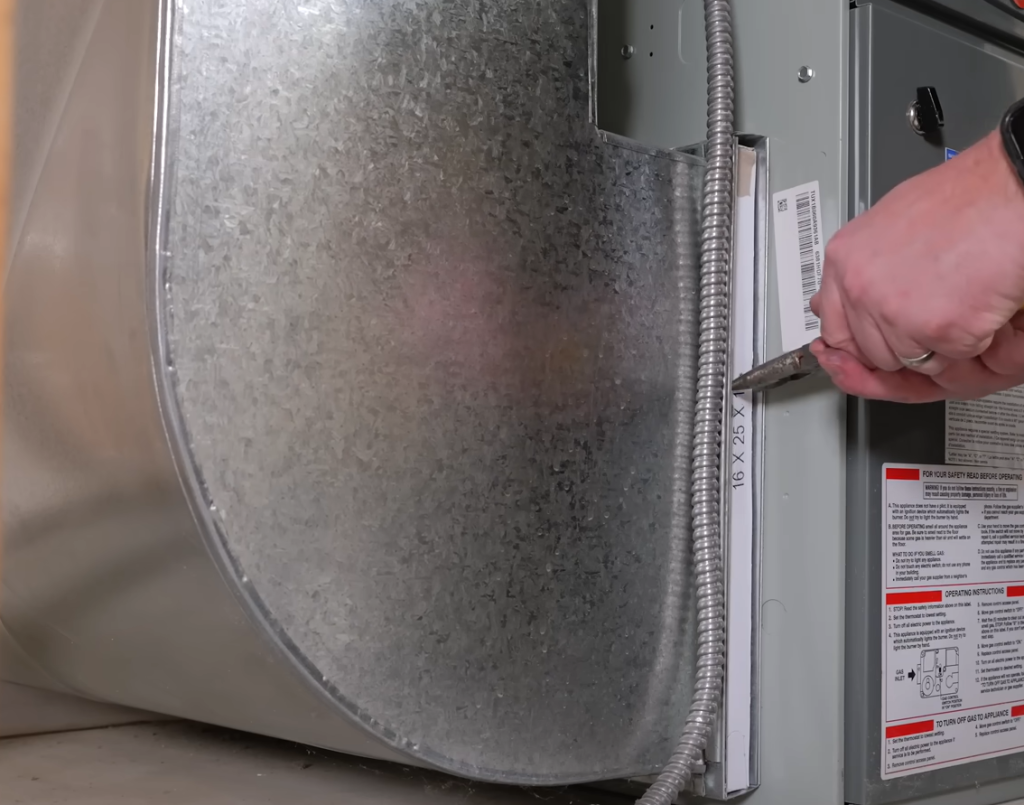
Mistake #1 : Struggling to Remove a Stuck Filter
This isn’t exactly a mistake but it’s a common frustration.
Old filters can be difficult to pull out, especially when there’s little space to grip them.
Simple fix:
- Use pliers if you have them
- Or screw a drywall/wood screw into the filter and pull it out easily
No damage, no struggle.
Mistake #2: Not Turning Off the Furnace Before Changing the Filter
Changing a filter while the furnace is running can cause serious problems.
Why this costs you money:
- The suction makes the dirty filter hard to remove
- The filter can tear, leaving debris behind
- Loose paper or plastic can get sucked into the blower motor, causing damage
Correct way to do it:
- Turn the thermostat temperature down
- Wait about 60 seconds to let the furnace cool
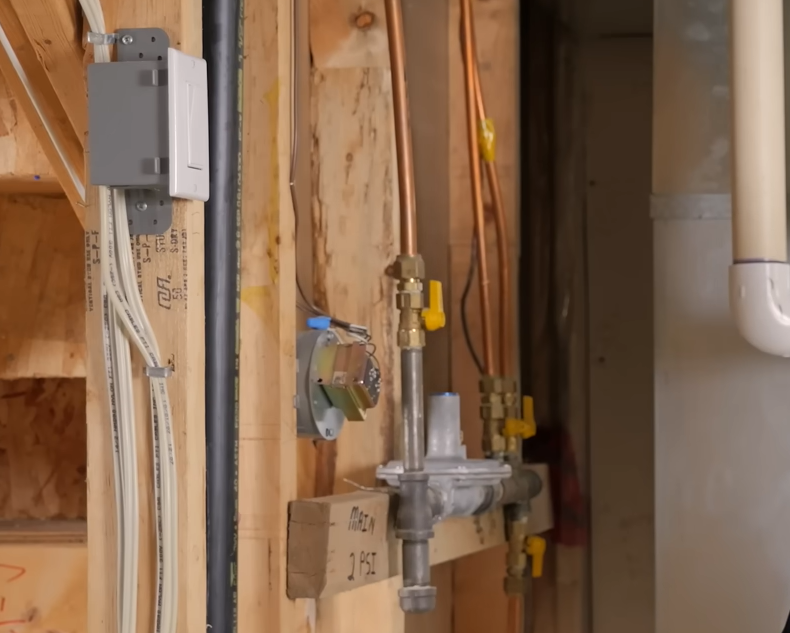
- Then turn off power using the nearby furnace switch or breaker
Turning the power off immediately without cooling can overheat the furnace and lead to an expensive service call.
Mistake #3: Installing the Filter Backward
Yes, direction matters.
If the filter is installed backward:
- Airflow becomes more restrictive
- Filter material can get pulled into the furnace
- Internal components may be damaged
How to install it correctly:
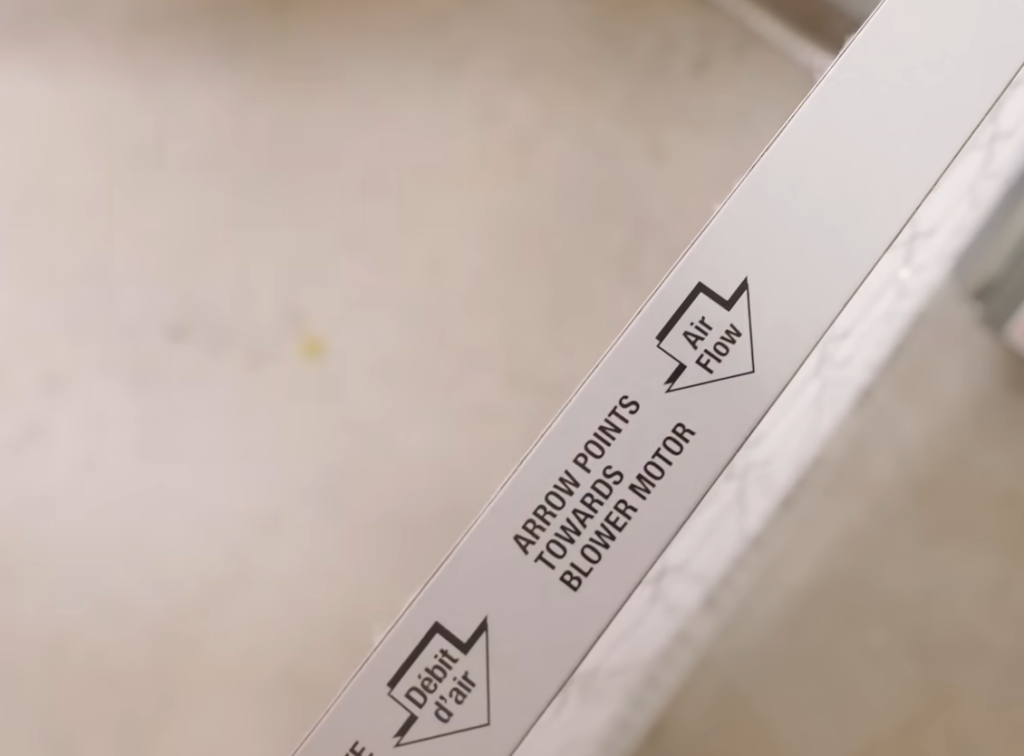
- Look for arrows on the filter
- Arrows must always point towards the furnace
Pro tip:
Use a marker to draw an arrow on the ductwork pointing toward the furnace so you never forget.
Mistake #4: Not Changing the Filter Often Enough
Most people wait too long.
Industry standard:
- Change filters every 3 months
But that’s not one-size-fits-all.
- If your filter looks very dirty after 3 months → change it monthly or every 2 months
- If it still looks fairly clean → you may stretch it another month
What happens if you wait too long?
- Furnace overheats
- Higher gas usage
- 25–30% increase in electricity costs
Best habit:
Set a reminder on your phone. At the very least, change your filter twice a year.
Mistake #5: Buying an Overpriced Filter Thinking It Improves Air Quality
This is the most expensive mistake.
Many homeowners buy high-rated filters (MERV 13 or 14) thinking they’ll reduce dust and improve air quality. In many systems, this actually causes harm.
Why expensive filters can cost you more:
- They are more restrictive
- Restriction increases energy use
- Poor airflow stresses your furnace
- It’s similar to running the furnace with a dirty filter
Best filter choice for most homes:
- Cheap fiberglass filters
- Or a MERV 8 filter (great balance of airflow and filtration)
When higher MERV filters make sense:
- Severe allergies or asthma
- Willingness to:
- Replace filters more often
- Pay higher energy bills
- Run the fan 24/7
For serious air quality concerns, a whole-house air cleaner is a better solution and requires an HVAC professional.
Cleaner Filters Mean Savings on Bills and Repairs
Your furnace filter does more than just trap dust; it affects airflow, energy costs, and the lifespan of your furnace. Avoiding these five common mistakes can lower your utility bills, prevent furnace damage, and improve overall system efficiency.
If you ever need expert help, repairHVACnow connects you with experienced HVAC technicians who can inspect your system, recommend the right filter, and fix issues before they become costly. Sometimes, spending less and doing it right really does save you more.