
When Allergy Season Starts & Why it Feels Worse Indoors
Allergy season doesn’t arrive all at once, it builds in waves.
- Tree pollen begins in late winter
- Grass pollen peaks through spring
- Weed pollen extends symptoms into late summer
So for those of you wondering when does pollen season start and end it’s bad news because tree, grass and wood pollen means symptoms start as early as February and continue well into fall according to the Asthma and Allergy Foundation of America. If you’ve been thinking why is air quality bad today in your area, know that;s why.
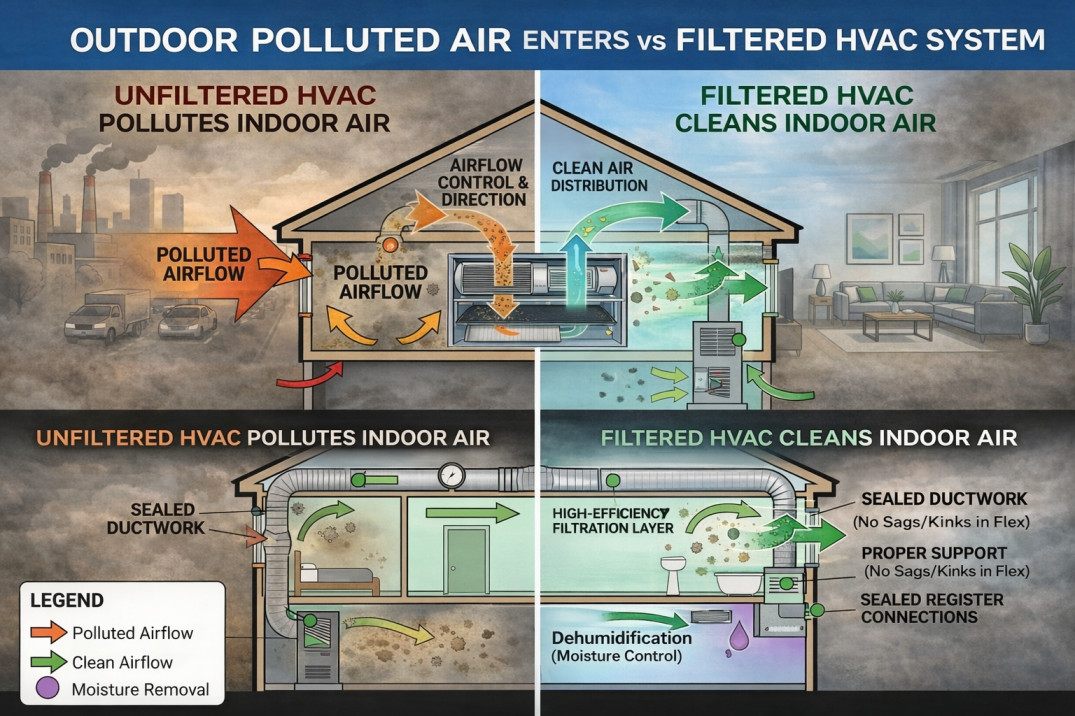
It doesn’t get any better for the many homeowners who expect relief indoors. The reality seconded by the EPA is that indoor air can feel worse, especially when the HVAC system is pulling in and recirculating airborne particles.
Why Indoor Air Quality Can Be Worse than Outside
Even in cities where pollen levels are closely tracked like the NYC pollen count, pollen count Boston, or coastal pollen counts, symptoms often intensify indoors.
In high-allergen regions such as Texas, local tracking like the Austin allergy report highlights just how severe exposure can be. But the real challenge is understanding what happens after all that pollen-laden air enters your home.
What’s Happening Inside Your System:
- Leaky ducts pull in dust and pollen from attics
- Weak filtration allows particles to circulate repeatedly
- Airflow imbalance traps contaminated air
- Humidity worsens irritation and particle spread
Signs Your HVAC System is Making Allergies Worse
If your allergies or seasonal allergy symptoms feel worse at home, your HVAC system may be contributing.
Common Warning Signs:
- Dust returns quickly after cleaning
- Sneezing or irritation increases indoors
- Certain rooms feel stuffy or stagnant
- Air feels heavy or stale
- Symptoms resemble mild flu symptoms without illness
These patterns often indicate airflow or duct system issues rather than just outdoor exposure.
What You Can Safely Check & What You Shouldn’t Touch
Some steps are safe for homeowners and can improve conditions quickly. Other steps that involve ductwork or system performance professionals should be contacted because improper handling can create airflow imbalance or safety risks.
| Safe checks | Leave these to professionals |
| Replace or inspect air filters | Sealing duct leaks |
| Keep vents open and unobstructed | Airflow balancing |
| Clean visible vent covers | System pressure adjustments |
| Check for obvious airflow differences | Internal duct inspections |
Leaky duct systems can significantly impact performance, with U.S. Department of Energy estimates showing that a large portion of conditioned air can be lost before it reaches living spaces.
Why Air Quality Feels Worse in Some Cities
Air quality challenges vary by region, which is why conditions can feel dramatically different depending on where you live.
In the Southwest, dry conditions often leave residents questioning why is the air quality bad in phoenix today or similar in nearby areas. Dust and outdoor particulates can easily enter poorly sealed systems.
In places like Denver, homeowners frequently notice shifts in air clarity due to altitude and pollution layering. In the Midwest, seasonal transitions contribute to concerns around why is the air quality bad in wisconsin today.
Regardless of location, the common factor is your HVAC influencing your indoor exposure.
Do Air Purifiers Actually Help?
Many homeowners turn to an air purifier when symptoms worsen.
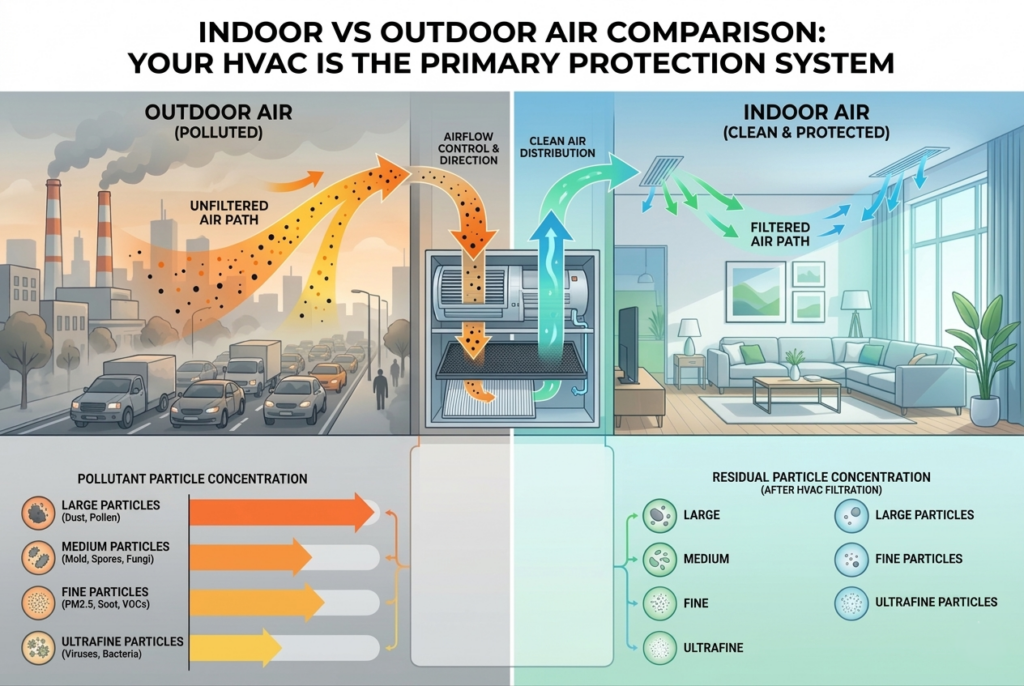
Options like a home air purifier, portable air purifier, or air purifier for home can genuinely help reduce airborne particles in specific areas. Air purifiers support cleaner air, but they don’t replace HVAC system performance.
| Where they help | Where they fall short |
| Bedrooms or small enclosed spaces | Whole-home airflow issues |
| Reducing localized airborne particles | Duct leakage problems |
| System-wide contamination |
Proper filtration plays a critical role in reducing airborne particles, as outlined in ASHRAE indoor air quality guidance used across HVAC system design and standards.
Medication vs Fixing the Root Cause
For symptom relief, options like the best allergy medicine for pollen or even infant allergy medicine are frequently sought out at pharmacies and local stores in this season. Airborne particles can aggravate respiratory symptoms and irritation, as noted in CDC indoor air health guidance.
These can reduce discomfort, but they do not address what’s causing poor air quality inside the home. A balanced approach works best, but long-term relief often depends on improving airflow and filtration.
| Approach | What it addresses |
| Medication | Symptoms |
| HVAC improvements | Root cause |
What a Professional HVAC Inspection Actually Does
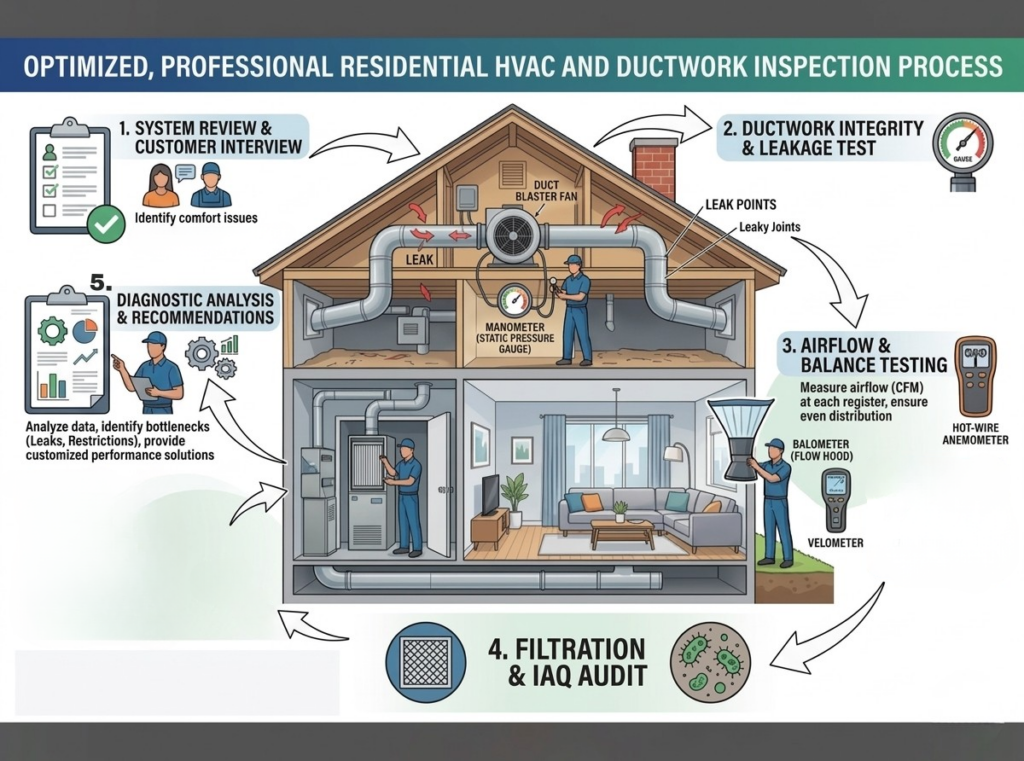
A proper inspection focuses on identifying where air quality is being compromised.
Technicians Typically Evaluate:
- Duct leakage and connection integrity
- Airflow and pressure balance
- Filter efficiency and compatibility
- Insulation condition
- Sources of indoor contamination
When to Call a Professional
You should schedule an inspection if:
- Airflow is uneven across rooms
- Dust buildup continues despite cleaning
- Symptoms persist indoors
- Energy bills increase without clear reason
- Indoor air feels heavier than outdoor air
These are strong indicators that the issue goes beyond surface-level fixes.
Quick Spring Air Quality Action Plan
| Timeframe | Tasks |
| Weekly | Check and replace filters |
| Keep vents open | |
| Monthly | Monitor airflow consistency |
| Inspect visible duct areas | |
| Before peak season | Schedule HVAC inspection |
| Address airflow or duct issues early |
Get Ahead of Peak Allergy Season
If you’re noticing worsening seasonal allergies, indoor discomfort, or airflow issues, it’s time to act before peak demand.
Schedule your HVAC inspection today
repairHVACnow connects homeowners with licensed professionals who improve air quality, restore airflow, and protect long-term comfort.
FAQs
Q1. When does allergy season typically start?
Allergy season usually begins in late winter and builds through spring, depending on climate and pollen types.
Q2. Why does indoor air feel worse than outside?
Indoor air can worsen due to poor filtration, duct leaks, and recirculated contaminants trapped inside the home.
Q3. Do air purifiers replace HVAC improvements?
No. Air purifiers help in small areas but cannot fix whole-home airflow or duct-related problems.
Q4. When should I call an HVAC professional?
If symptoms persist indoors, airflow is uneven, or dust continues accumulating, a professional inspection is recommended.
Q5. Why is air quality bad today even when it looks clear outside?
Air can seem bad even when it looks clear because many pollutants, like pollen, fine dust, and tiny particles, are invisible. Indoors, duct leaks and weak filtration can keep these particles circulating, making the air feel stuffy or irritating.
