
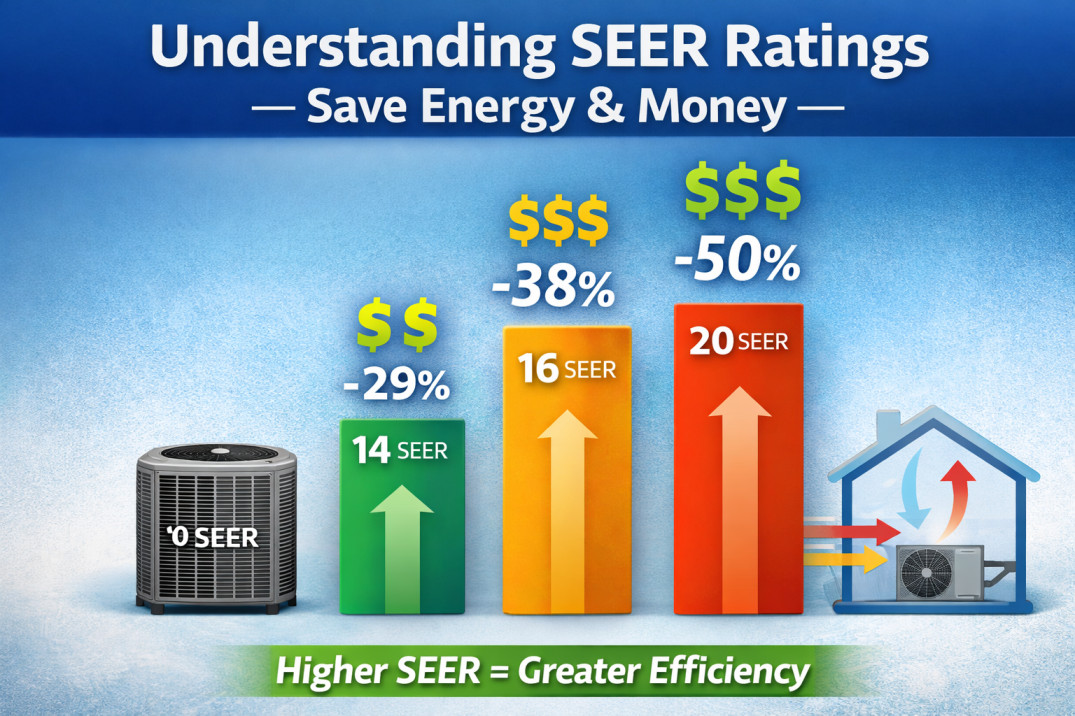
When shopping for a new air conditioner or heat pump, understanding SEER ratings is key to selecting the right system for your home. SEER, or Seasonal Energy Efficiency Ratio, is a standard measure used to evaluate the cooling efficiency of HVAC systems over an entire cooling season.
Simply put, the SEER rating of a unit is calculated by dividing the total cooling output during a typical cooling season by the total electric energy consumed during that period. The higher the SEER rating, the more efficient the unit is, which can translate to substantial savings on your energy bills.
How SEER Ratings Factor Into Efficiency
Your heating and cooling system typically consumes more energy than any other appliance in your home. When replacing or upgrading your HVAC system, paying attention to the SEER rating in HVAC ensures you choose a system that is both efficient and cost-effective.
For example:
- Older air conditioners may have a SEER rating of 10 or less.
- Upgrading from a 10 SEER to a 14 SEER system can reduce power consumption by around 29%, depending on your electricity usage.
- This could save up to $1,500 over five years or $3,000 over ten years in energy costs.
SEER Requirements by Region
The US DOE has established HVAC SEER requirements for residential air conditioners:
Northern States
Minimum SEER of 14
Southwest And Southeast States
Minimum SEER of 15
Homes with older air conditioners often fall below these requirements, making it a smart choice to upgrade to a newer system. You can usually find the SEER rating on the Energy Guide sticker on your outdoor condensing unit.
For homeowners curious about HVAC SEER requirements in Delaware or other specific locations, local energy codes may apply, so it’s important to confirm regional requirements before purchasing a new system.
Choosing the Best SEER Rating for HVAC
Selecting the best SEER rating for HVAC depends on your climate, budget, and energy-saving goals:
14 – 16 SEER
Offers excellent efficiency and is common for standard installations.
16 SEER systems
Average cost for a 16 SEER HVAC system ranges depending on brand and installation complexity.
20 SEER systems
High-end units like Carrier offer 20 SEER ratings for maximum efficiency. The cost for 20 SEER Carrier HVAC units is higher but can be justified by long-term savings.
Tip: The right SEER rating depends on the size of your home, insulation, ductwork quality, and local climate conditions.
SEER Rating Charts and Maps
Understanding how SEER ratings vary by region can help you make informed decisions. An HVAC SEER rating map or HVAC SEER rating chart shows minimum required SEER levels and recommended efficiency based on your location. These tools are particularly helpful when comparing units in different brands and models.
Factors that Affect Real-World SEER
While the stated SEER rating provides a guideline, actual efficiency depends on several factors:
Proper Sizing
Units that are too large or too small for your home can reduce efficiency.
Installation Quality
Poor installation can cause leaks or uneven airflow, reducing SEER performance.
Ductwork Condition
Air leaks or inadequate insulation in duct systems impact efficiency.
System Integration
Air conditioners work in tandem with furnaces or air handlers, and their age and condition can affect overall performance.
Tools to Help Compare SEER Ratings
Websites like HVACDirect.com offer tools to calculate potential savings and filter units by SEER rating. For instance, you can predict the energy costs for different SEER levels and narrow your choices to systems that fit your efficiency and budget goals.
Conclusion:
Ready to upgrade to a high-efficiency system and start saving? The team at repairHVACnow is here to help. We don’t just sell systems; we provide expert guidance, from interpreting SEER charts and navigating local rebates to ensuring a flawless, professional installation. Contact repairHVACnow today for a free consultation and take the first step toward a more comfortable and energy-efficient home
FAQs About SEER Ratings
What does SEER mean in HVAC?
SEER stands for Seasonal Energy Efficiency Ratio and measures the cooling efficiency of an air conditioner or heat pump over a typical season.
What is a SEER rating in HVAC?
The SEER rating is the cooling output divided by the energy used. Higher SEER means greater efficiency.
What are the HVAC SEER requirements?
Minimum SEER ratings are 13 in northern states and 14 in the southwest and southeast. Check local regulations, like SEER requirements in Delaware, for exact numbers.
What is the average cost of a 16 SEER HVAC system?
Costs vary by brand, size, and installation, but 16 SEER systems are generally mid-range in price.
How much does it cost for a 16 SEER Carrier HVAC system?
Prices depend on home size and installation, but Carrier units are typically in the higher-end range.
How much does a 20 SEER Carrier HVAC system cost?
High-efficiency 20 SEER units are premium systems, with higher upfront costs but long-term energy savings.
How do I choose the best SEER rating for HVAC?
Consider your climate, budget, home size, and potential energy savings. A SEER chart or map can help you decide.
