
If you’re looking to maximize energy efficiency and reduce heating costs during the colder months, a dual fuel HVAC system might be the solution for you. By pairing an electric heat pump with a traditional gas furnace, you can enjoy better comfort, significant energy savings, and improved performance all year round.
Dual fuel HVAC systems are designed to intelligently combine two heating sources, ensuring your home stays warm in the coldest winter days while remaining energy-efficient during milder weather. Understanding how they work and the benefits they offer can help you decide if this is the right solution for your home.
How Does Dual Fuel HVAC Work?
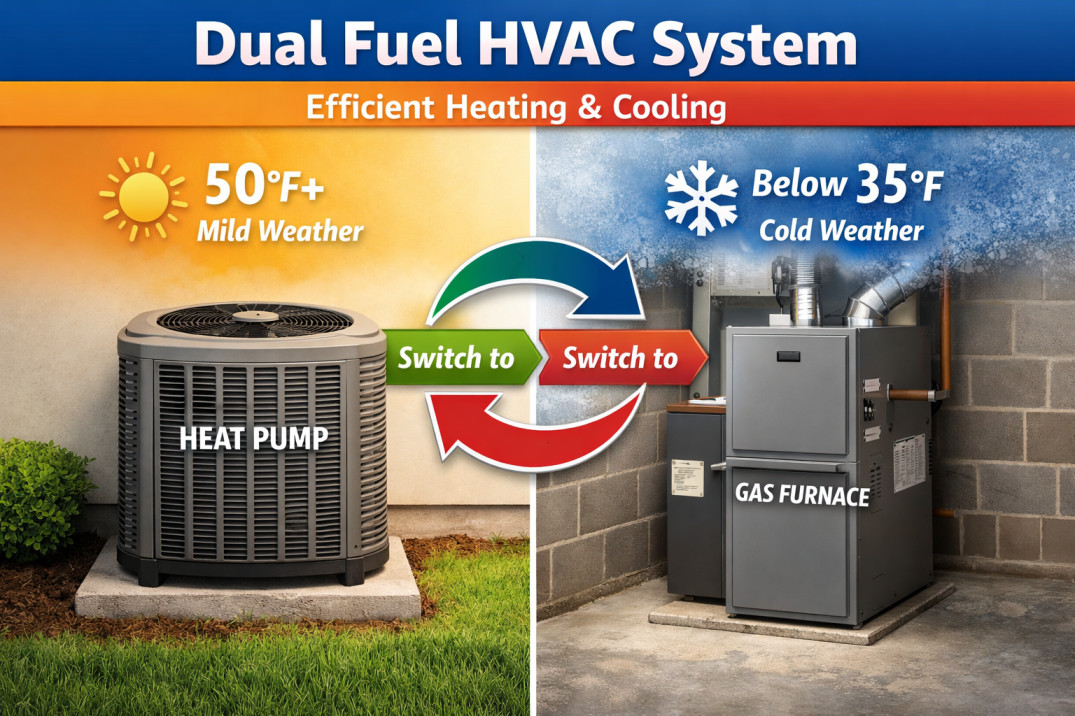
A dual fuel HVAC system combines the efficiency of a heat pump with the reliability of a gas furnace. Heat pumps are highly efficient in moderate temperatures, transferring heat from the outside air to your home. However, when temperatures drop below approximately 35° F, heat pumps lose efficiency. At this point, a traditional heat pump will switch to auxiliary electric heating, which can significantly increase energy usage and your electricity bills.
A dual fuel system avoids this problem by pairing a high-efficiency gas furnace with the heat pump. An outdoor temperature sensor monitors the conditions and automatically signals the system to switch between the heat pump and the gas furnace based on a pre-programmed temperature balance point.
- Above the balance point: The system uses the heat pump, maximizing efficiency.
- Below the balance point: The gas furnace takes over, providing reliable, cost-effective heating.
This seamless transition ensures that your home remains comfortable, even in freezing temperatures, while avoiding the high electricity costs associated with auxiliary heat.
Benefits of Dual Fuel HVAC
Investing in the best dual fuel HVAC system comes with several advantages:
Energy Savings
By switching between gas and electric based on outdoor temperature, you can significantly reduce heating costs.
Enhanced Comfort
Maintain a consistent indoor temperature regardless of extreme outdoor weather conditions.
Optimized Efficiency
Avoid reliance on costly electric auxiliary heat while maximizing overall system performance.
Versatility
Ideal for climates with wide temperature ranges, from bitterly cold winters to hot summers.
Environmental Benefits
Using a heat pump for mild weather reduces carbon emissions compared to running gas constantly.
Potential Incentives
Some regions offer rebates or tax credits for installing energy-efficient systems, helping offset installation costs.
Common Dual Fuel HVAC Problems
While dual fuel HVAC systems are generally reliable, some homeowners may encounter issues:
Dual Fuel Hvac Aux Heat Not Working
Auxiliary heat may fail to engage if thermostat settings are incorrect or if the outdoor sensor is malfunctioning.
System Switching Delays
The furnace may not switch immediately when temperatures cross the balance point, especially if sensors are miscalibrated.
Maintenance Requirements
Both the heat pump and gas furnace require regular inspections to prevent problems and ensure efficiency.
Price Considerations
Installation and component costs can vary widely depending on the system type and home size.
Dual Fuel HVAC Prices
The cost of a dual fuel HVAC system depends on multiple factors, including unit size, brand, and installation complexity. Here’s a general overview:
Dual Fuel HVAC Package Unit Prices
Residential packages typically range from $6,000 to $12,000, including installation.
Individual System Components
Heat pumps and high-efficiency furnaces may be priced separately, which can affect overall costs.
Long-Term Savings
Although the upfront cost is higher, energy savings over time often make the investment worthwhile.
By understanding system pricing, you can budget effectively and consider potential rebates or incentives to offset costs.
Is a Dual Fuel HVAC System Worth It?
Many homeowners wonder, “Is a dual fuel HVAC system worth it?” For those living in cold climates with access to natural gas or propane, the answer is usually yes. Benefits include:
- Reduced energy bills during cold weather.
- Enhanced comfort without relying on expensive electric auxiliary heat.
- Longer system lifespan due to balanced usage of both heating sources.
- Improved control over indoor temperature in homes exposed to fluctuating weather.
Even though installation costs are higher than a standard heat pump or gas furnace alone, most homeowners find the combination of comfort, efficiency, and energy savings justifies the investment.
Choosing the Best Dual Fuel HVAC System
When selecting the best dual fuel HVAC system, keep these factors in mind:
Efficiency Ratings
Look for high SEER (cooling) and AFUE (heating) ratings for optimal performance.
Brand Reputation
Rheem, Trane, Carrier, and other trusted brands offer reliable dual fuel systems.
Climate Compatibility
Ensure the system suits your region’s temperature extremes.
Professional Installation
Work with a licensed HVAC professional for correct sizing and setup.
System Type
Decide between a split system or dual fuel HVAC package units, depending on space and installation preferences.
Conclusion:
A dual fuel HVAC system is an excellent investment for homeowners seeking comfort, energy efficiency, and reliable heating performance. By intelligently switching between a heat pump and a gas furnace, it ensures your home stays warm in winter, cool in summer, and keeps utility costs under control. If you want the best dual fuel HVAC system, carefully evaluate brands, system types, and installation options to make the most informed decision.
If you’re ready to explore the benefits of a dual fuel HVAC system and want expert guidance on choosing, installing, or maintaining your system, repairHVACnow is here to help. Our team of experienced professionals can assist you in selecting the best system for your home, ensuring proper installation, and maximizing your energy savings. Contact repairHVACnow today for a consultation or to learn more about how a dual fuel system can improve your home comfort and efficiency.
FAQs About Dual Fuel HVAC
What is a dual fuel HVAC system?
A dual fuel HVAC system combines an electric heat pump with a gas furnace to efficiently heat and cool your home throughout the year.
How does dual fuel HVAC work?
The system uses the heat pump in mild weather and automatically switches to a gas furnace in freezing temperatures based on a programmed balance point.
What are the benefits of dual fuel HVAC?
Benefits include lower energy bills, consistent comfort, reduced reliance on auxiliary electric heat, and improved system efficiency.
What are common dual fuel HVAC problems?
Issues may include aux heat not working (Rheem units), switching delays, and the need for regular maintenance.
How much does a dual fuel HVAC system cost?
Dual fuel HVAC package unit prices typically range from $6,000 to $12,000, depending on brand, size, and installation complexity.
Is a dual fuel HVAC system worth it?
Yes. For homeowners in colder climates, the energy savings, comfort, and efficiency usually outweigh the higher installation costs.
How do I choose the best dual fuel HVAC system?
Consider energy efficiency ratings, system compatibility, professional installation, and available rebates or incentives.
