
Why Your Home Feels Dusty, Uneven, and Hard to Keep Comfortable
Many homeowners begin noticing the same frustrating patterns around the house. One room never feels comfortable, dust keeps appearing on furniture, airflow seems weak from certain vents, and energy bills slowly creep upward.
In many homes, these symptoms trace back to hidden air duct problems. Your duct system acts like the circulatory system of your HVAC setup, carrying heated or cooled air from the furnace or air conditioner to every room. When something goes wrong inside that network, the entire system has to work harder to maintain comfort.
Many homeowners assume duct issues are simple DIY fixes. In reality, once problems involve attic duct runs, insulation damage, or structural connections, repairs can quickly become unsafe without proper tools or training.
At repairHVACnow, we connect homeowners with licensed, trained, certified technicians who diagnose duct issues safely and accurately.
If you are noticing uneven temperatures, dust buildup, or weak airflow, schedule your HVAC inspection today before seasonal heating or cooling demand increases.
Quick Homeowner Symptoms Checklist
If you recognize several of these signs, duct issues may already be affecting your system:
- Whistling sounds coming from vents
- Dusty or stale indoor air
- Weak airflow in one room
- Rooms that never reach thermostat settings
- Visible crushed or disconnected duct sections in attic spaces
- Rising utility bills without increased system usage
These symptoms often indicate deeper duct system concerns that require inspection and airflow testing.
1. Leaky Air Ducts
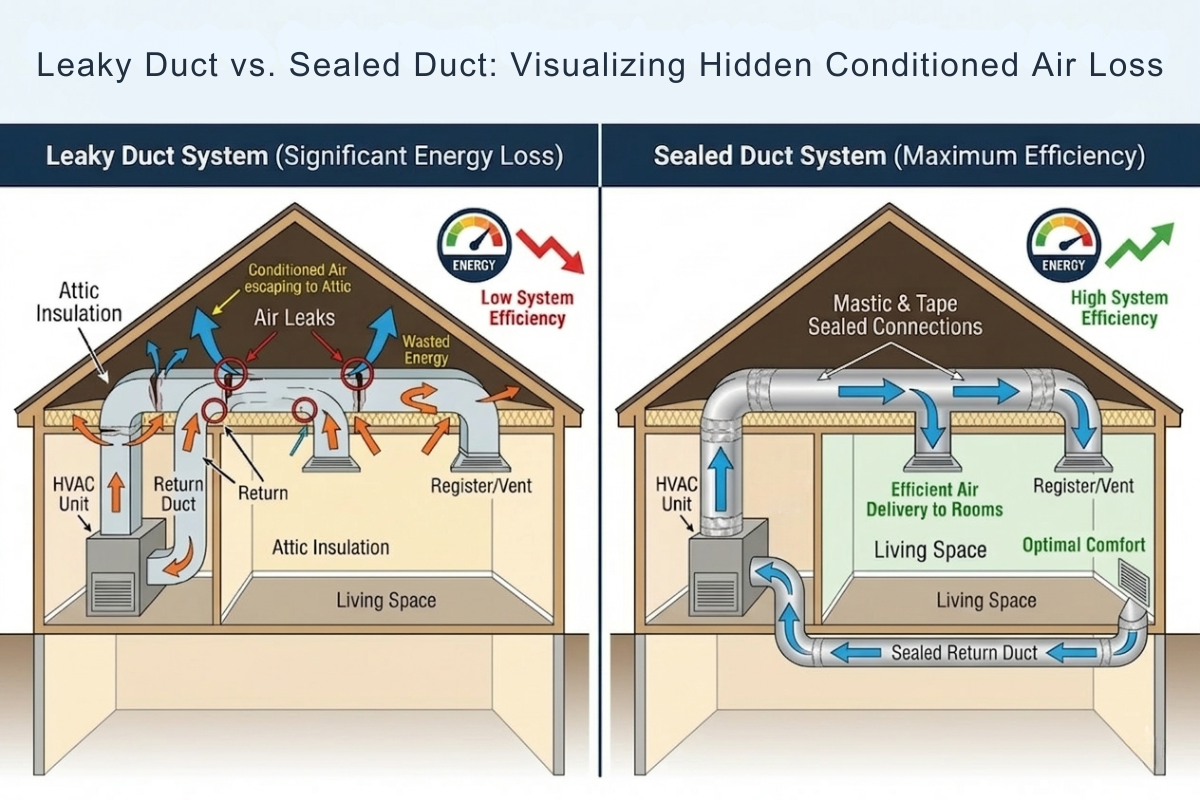
One of the most frequent air duct problems technicians encounter involves leaking duct joints.
Signs You May Notice
- Uneven temperatures between rooms
- Weak airflow from vents
- Higher monthly energy bills
What Causes It
Over time, duct joints loosen or seals deteriorate. When this happens, conditioned air escapes into attics, crawlspaces, or basements before it ever reaches living spaces.
The U.S. Department of Energy reports that homes can lose 20 to 30 percent of conditioned air due to duct leakage.
What You Can Safely Do
- Inspect visible duct sections from accessible areas
- Look for obvious gaps or disconnected joints
When to Call a Professional
If leaks appear widespread or airflow problems continue.
What a Technician Will Do
Technicians perform diagnostic testing, identify ductwork leaks, and complete air duct leak repair using professional sealing materials and airflow balancing techniques.
If visible duct connections appear loose or disconnected, schedule inspection before system efficiency drops further.
2. Dirty Air Ducts
Dust buildup inside ducts is one of the most misunderstood HVAC topics.
Signs You May Notice
- Dust blowing from vents
- Stale or musty air
- Increased allergy symptoms
What Causes It
Normal household dust, renovation debris, or pest activity can accumulate inside ducts over time.
What You Can Safely Do
- Replace HVAC filters regularly
- Vacuum vent covers and grilles
- Keep supply and return vents unobstructed
When to Call a Professional
The EPA explains that duct cleaning is recommended when visible debris buildup, pest contamination, or mold growth is present.
What a Technician Will Do
Technicians evaluate contamination levels and recommend whether professional cleaning is necessary.
Homeowners often search for air duct cleaning near me after noticing persistent dust. A professional inspection can confirm whether cleaning is needed and explain realistic air duct cleaning cost expectations while recommending practical air duct maintenance tips.
If dust continues circulating despite filter changes, schedule professional evaluation.
3. Disconnected Ductwork Issues
Disconnected ducts are more common than many homeowners realize.
Signs You May Notice
- Certain rooms never heat or cool properly
- Major airflow differences between vents
What Causes It
Flexible ducts can separate over time due to vibration, aging fasteners, or previous renovation work.
What You Can Safely Do
- Inspect visible ducts from a safe standing area
- Look for sections that appear detached
When to Call a Professional
Avoid crawling into unsafe attic spaces or attempting structural repairs yourself.
What a Technician Will Do
Professionals reconnect duct sections, secure supports, and reseal joints to restore proper airflow.
If a duct section appears disconnected, book service before conditioned air continues escaping.
4. Improper Duct Insulation
Duct insulation helps maintain air temperature as it travels through the system.
Signs You May Notice
- Condensation or sweating ducts
- Longer HVAC run times
- Temperature swings between rooms
What Causes It
Insulation can deteriorate or become damaged, especially in attic spaces exposed to extreme temperatures.
What You Can Safely Do
- Observe insulation condition without touching damaged materials
When to Call a Professional
Handling deteriorating insulation incorrectly can expose contaminants.
What a Technician Will Do
Technicians inspect and repair air duct insulation problems, correct insulation gaps, and verify system airflow performance.
If you notice wet insulation or condensation forming on ducts, schedule an inspection.
5. Blocked Air Vents
Sometimes airflow issues start with something simple.
Signs You May Notice
- Weak airflow from vents
- Certain rooms feeling stuffy or stagnant
What Causes It
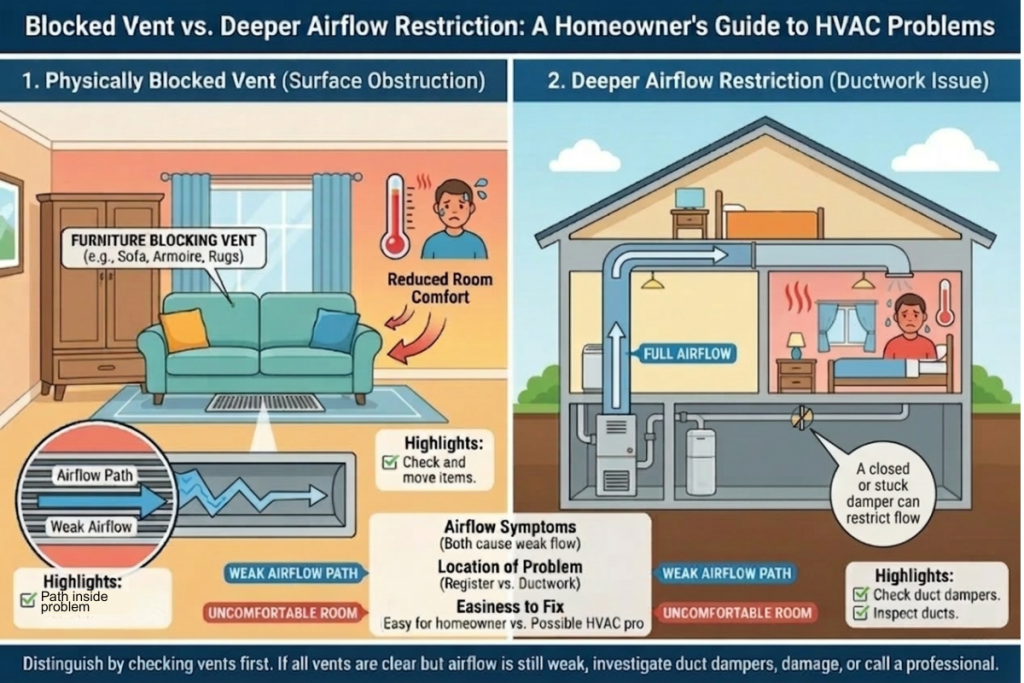
Furniture, rugs, curtains, or dust buildup can block air vent openings and restrict airflow.
What You Can Safely Do
- Move furniture away from vents
- Ensure vents remain open
- Clean vent covers periodically
However, persistent airflow restriction may indicate deeper air duct blockage or distribution problems.
What a Technician Will Do
Technicians measure airflow and perform system balancing when necessary.
If airflow remains weak after clearing vents, professional testing is recommended.
6. Damaged HVAC Connections
HVAC systems rely on tight mechanical connections between ductwork and equipment.
Signs You May Notice
- Rattling or vibration near the furnace
- Air escaping near the air handler
What Causes It
Years of vibration, temperature changes, and aging seals can loosen system connections.
In the field, technicians often see loose connections near the air handler or plenum after years of attic heat and patchwork repairs.
What You Can Safely Do
- Observe for visible air loss around equipment connections
When to Call a Professional
Repairs involving sharp metal, electrical components, or mechanical equipment should always be handled by trained professionals.
The Occupational Safety and Health Administration warns that mechanical system repairs can pose injury risks without proper training.
What a Technician Will Do
Technicians inspect connections, reseal transitions, and secure system components to restore safe airflow.
If you hear vibration or air leakage near equipment, schedule professional inspection.
7. Poor Airflow Problems
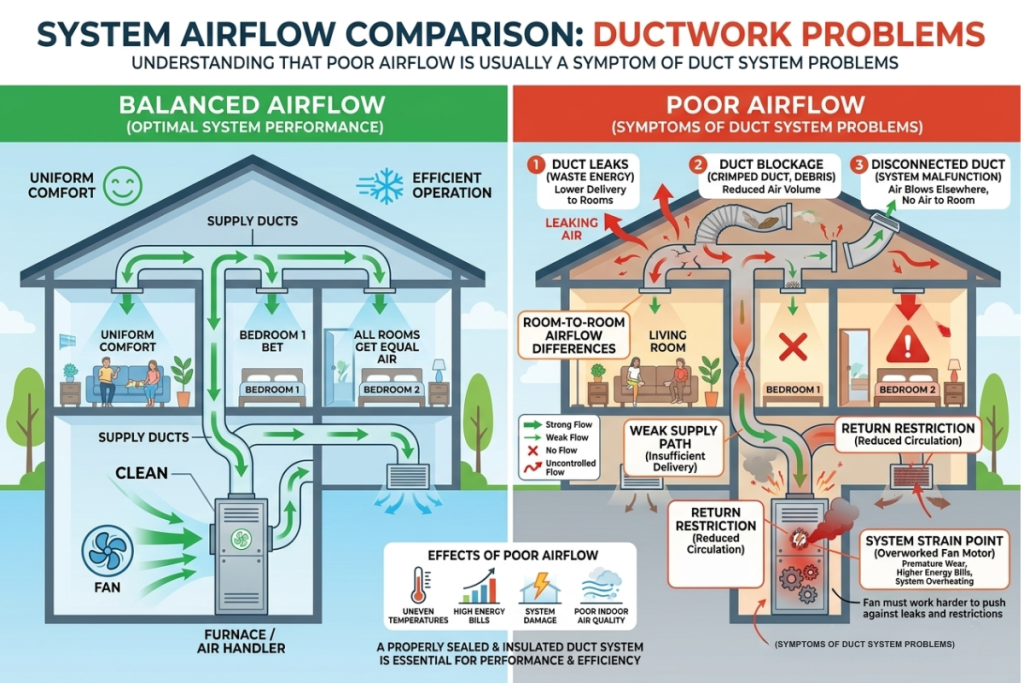
Poor airflow is often a symptom of multiple issues rather than a single problem.
Signs You May Notice
- Uneven heating or cooling
- Weak airflow throughout the home
What Causes It
Common causes include:
- leaking ducts
- crushed flexible duct runs
- airflow restrictions
- clogged filters
These conditions contribute to broader duct performance issues.
What You Can Safely Do
- Replace the air filter
- Check that vents remain open
What a Technician Will Do
Technicians measure airflow levels, identify restrictions, and recommend necessary repairs.
If airflow issues persist, call repairHVACnow for same-day service before equipment strain leads to larger repairs.
When to Stop Troubleshooting and Schedule Service
Homeowners can safely check filters, vents, and visible duct sections.
However, crawling through attic duct systems, cutting insulation, opening sealed duct runs, or working near HVAC equipment should always be left to trained professionals. Licensed technicians have the tools and training needed to diagnose duct system problems safely.
If multiple symptoms appear at once, stop troubleshooting and schedule professional service.
FAQs
What are the most common air duct problems in homes?
Leaking duct joints, blocked vents, disconnected duct sections, insulation damage, and airflow imbalance are among the most common duct system issues. These problems can lead to uneven temperatures, dust buildup, and higher energy bills if not corrected.
How do I know if I need air duct leak repair?
If certain rooms never reach the thermostat setting, airflow feels weak, or energy bills increase unexpectedly, duct leakage may be present. Professional inspection using airflow testing can confirm the problem.
Is duct cleaning really necessary?
Duct cleaning is only recommended when contamination, pests, or heavy debris buildup is present. A professional inspection helps determine whether cleaning will actually improve indoor air quality.
Can a blocked vent cause HVAC problems?
Yes. When furniture or rugs repeatedly block air vent openings, airflow becomes restricted. This can create pressure imbalances and reduce overall HVAC efficiency throughout the home.
How much does air duct cleaning cost?
Costs vary depending on home size, duct layout, and contamination level. A professional inspection helps determine whether cleaning is necessary and what the expected cost will be.
When should I call a professional for poor airflow?
Call a professional when airflow problems continue after replacing filters and clearing vents. Persistent airflow issues often indicate duct leaks, blockages, or structural system problems.
More Than Just Comfort
Duct issues affect more than room temperature. They influence indoor air quality, energy efficiency, and the long-term health of your HVAC system.
Ignoring air duct problems can lead to wasted energy, unnecessary system strain, and expensive repairs later.
When you contact repairHVACnow, here is what happens:
- Request an appointment online or by phone
- Your service time is confirmed
- A licensed technician arrives for inspection
- The full duct system is evaluated
- Findings and repair options are explained clearly
- Necessary repairs restore airflow and comfort
Seasonal demand often limits available service slots. Call repairHVACnow now or request your appointment today to restore safe airflow and reliable comfort in your home.
