
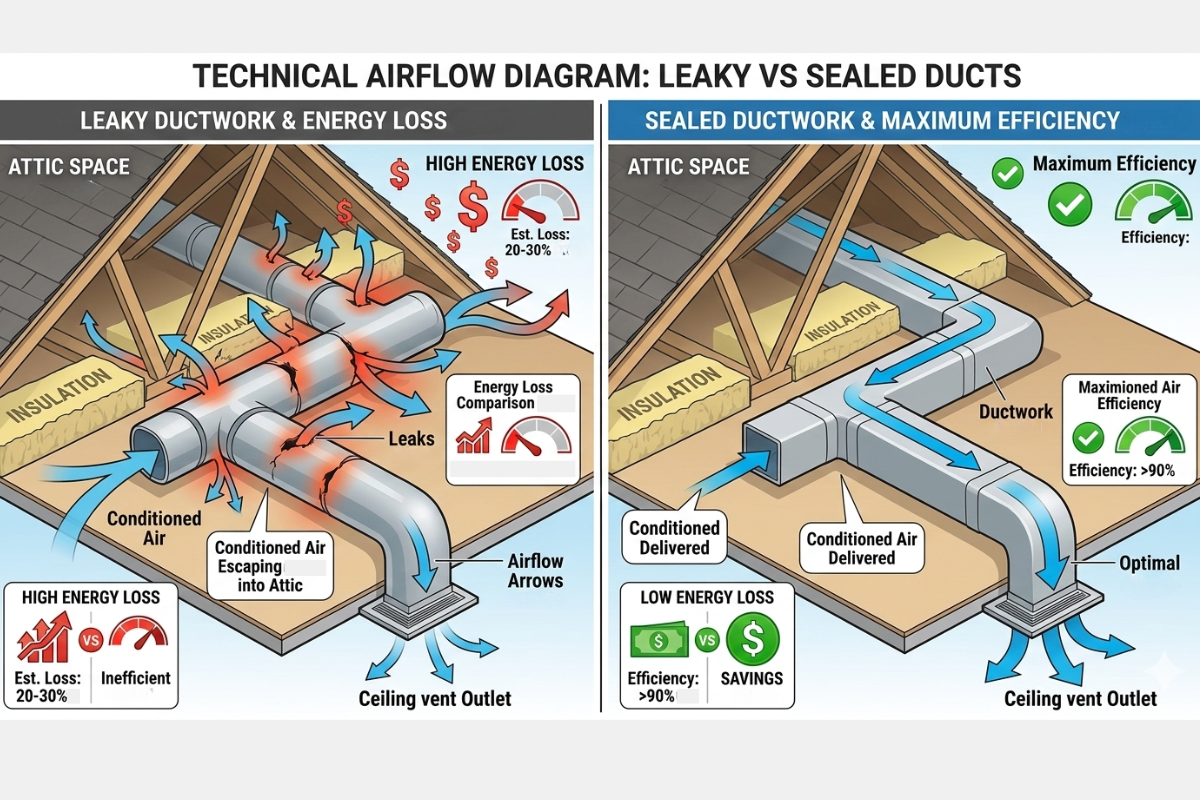
If certain rooms in your home feel colder in winter or hotter in summer, your system runs constantly, or your energy bills keep creeping up, there is a strong chance you are dealing with air duct leaks.
Many homeowners are surprised to learn that duct leaks often go unnoticed for years because they’re hidden in attics, crawlspaces, or wall cavities. Small gaps in duct joints, disconnected runs in attics, or aging flexible ducts can quietly waste conditioned air for months.
At repairHVACnow, we connect homeowners dealing with uneven temperatures or rising utility costs with licensed, trained, certified technicians who diagnose and correct airflow problems safely and correctly the first time. Most duct leaks are small and affordable to repair when caught early. But if ignored, they can increase energy bills and strain your HVAC system over time.
What Causes Air Duct Leaks in Homes?
Most ductwork leaks do not happen overnight. They develop gradually as materials expand and contract, fasteners loosen, sealants dry out, or sections shift over time. What starts as a small gap at a joint can slowly widen with each heating and cooling cycle.
Because ductwork is typically hidden in attics, crawlspaces, or behind walls, these leaks often go unnoticed until airflow becomes uneven or energy bills begin to rise.
Common causes include:
- Aging duct tape drying out
- Loose metal joints
- Flexible duct sagging in attic spaces
- Rodent damage
- Renovation work disconnecting runs
- Poor original installation
In the field, technicians often see disconnected ducts in attic spaces after storms or renovations. Homeowners rarely notice until airflow becomes uneven or energy bills spike. When ducts separate, conditioned air escapes into unconditioned spaces like attics or crawlspaces. That air never reaches your living areas.
If you suspect damage after a renovation or storm, inspect visible duct runs before your next heating or cooling cycle.
Common Signs Your Air Ducts Are Leaking
Over time, duct leaks create patterns that experienced HVAC technicians recognize immediately. Here are some of the most common symptoms they’ve diagnosed:
- Rooms that never reach thermostat temperature
- High energy bills without usage change
- Excess dust near vents
- Musty odors from registers
- HVAC running longer than normal
- Weak airflow in certain rooms
Every season, HVAC experts respond to homes where delayed duct repair led to compressor damage or blower strain.
If you notice more than one of these symptoms, it is time to schedule professional evaluation.
How Duct Leaks Increase Energy Bills and Reduce HVAC Efficiency
When ducts leak, conditioned air escapes before reaching your rooms. According to Energy Star, typical duct systems can lose 20 to 30 percent of conditioned air due to leaks and poor connections.
That means:
- Your system runs longer
- Equipment works harder
- Short cycling may occur
- Components wear out faster
This directly affects your ability to improve HVAC efficiency. It also increases repair risk and shortens equipment lifespan. Supply-side duct leaks allow conditioned air to escape before reaching living areas. Return-side leaks can pull attic dust, insulation fibers, or humidity into the system, affecting indoor air quality. In more severe cases, leakage can increase static pressure inside the duct system, forcing the blower motor to work harder than designed. This might indicate the need for professional duct cleaning services.
Sealing gaps delivers real duct sealing benefits, including:
- Even room temperatures
- Lower strain on blower motors
- Reduced monthly bills
These are practical home energy savings tips that prevent bigger breakdown costs later.
If your system runs constantly during extreme weather, schedule inspection before your system has to run at maximum load. This is a practical home energy savings tip that prevents bigger breakdown costs later.
Tools You Need to Detect Air Duct Leaks
If you suspect leaking ductwork, there are several easy-to-use tools that can help you pinpoint the issue before it turns into a bigger repair:
- Flashlight
- Smoke pencil or incense
- Thermal camera
- Manometer
- Professional blower door setup
DIY checks are a great first step, but they only reveal surface-level problems. To accurately measure total air loss and verify proper airflow throughout your home, professional evaluation is often necessary. Professional duct leakage testing uses calibrated equipment and airflow standards defined by ASHRAE to measure performance and ensure system balance.
Code compliance in many jurisdictions requires professional testing for accurate verification.
Step-by-Step Guide to Detecting Air Duct Leaks at Home
If you’re checking your ductwork for leaks for the first time and don’t know how to check ductwork for leaks, the step-by-step guide below will walk you through the process in a safe, practical way. Follow these clear steps to inspect common trouble spots and identify visible leaks before deciding on repairs or professional service:
- Turn off the HVAC system.
- Inspect visible duct sections for gaps.
- Feel for loose connections.
- Use smoke to observe air escaping at joints.
- Look for disconnected boots at vents.
While these tasks are DIY-safe to perform, make sure not to
- enter unsafe attic spaces without proper lighting and support. OSHA warns that attic environments present fall hazards and heat stress risks
- cut into duct lines
- disturb insulation
If your preliminary inspection for leaks does not reveal any visible faults but symptoms persist, it is time to schedule professional diagnostics.
How to Seal and Fix Air Duct Leaks Properly
If you are researching how to fix air duct leaks, it is important to understand that most permanent sealing should be performed by trained technicians. Duct systems affect airflow balance, combustion safety, and equipment lifespan.
Safe Steps Homeowners Can Take
These actions are generally safe if ducts are easily accessible and you are not entering unsafe attic or crawl spaces:
- Visually inspect exposed metal duct joints for obvious separation
- Gently reconnect a loose, slipped collar if it easily slides back into place
- Check that vent boots are firmly attached to the floor or ceiling
- Ensure flexible ducts are not crushed or sharply bent
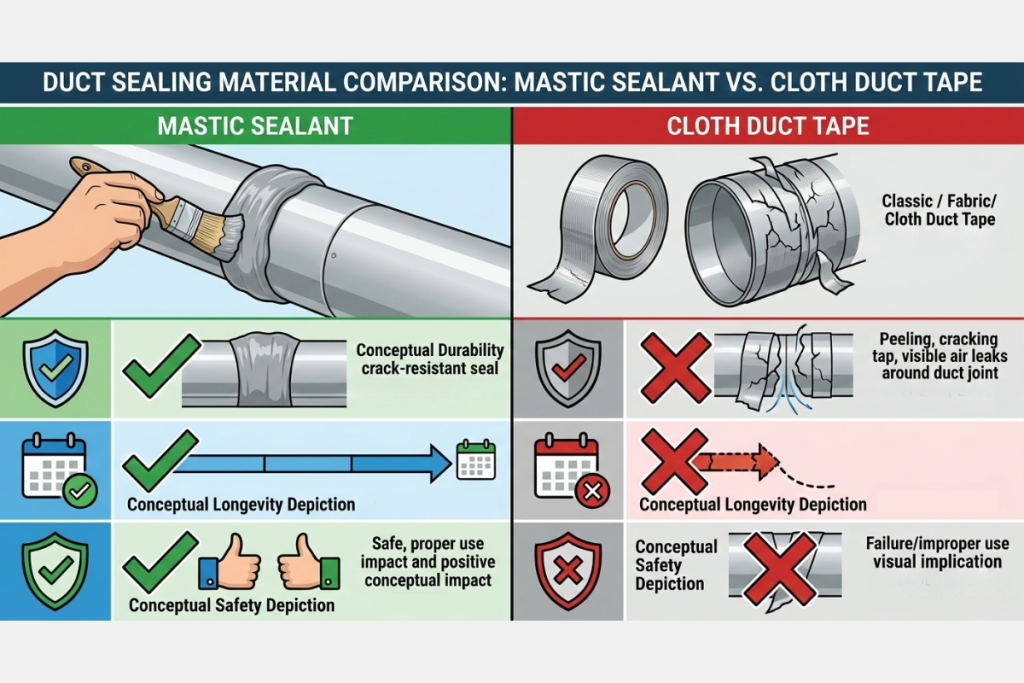
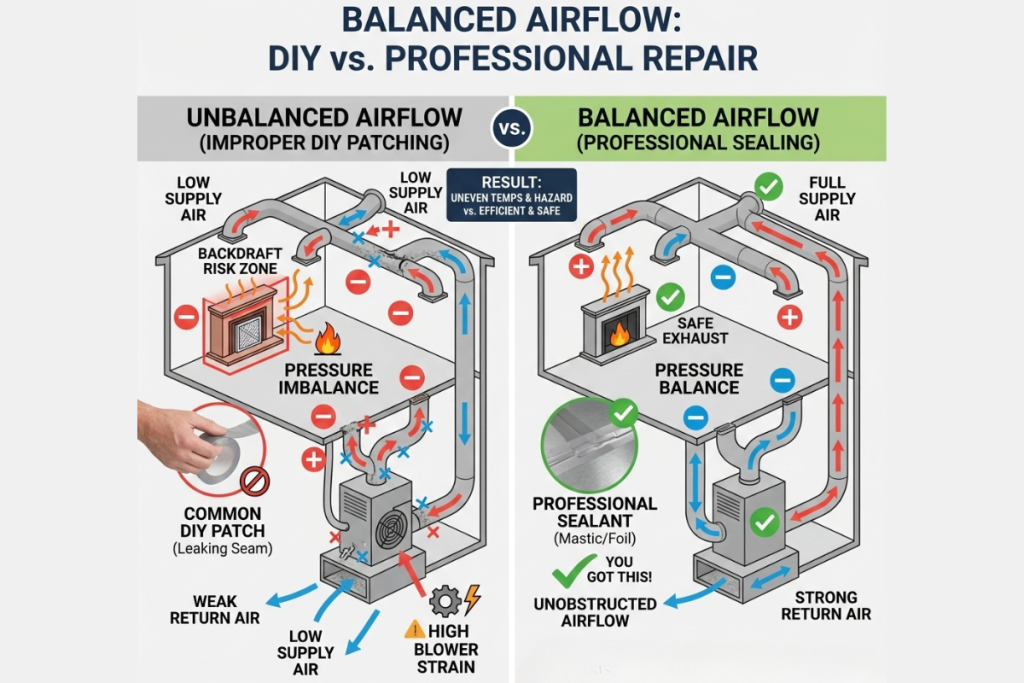
While sealing ducts with mastic or metal foil tape rather than cloth duct tape is recommended by experienced techs, homeowners must remember that applying these materials incorrectly can create airflow imbalance, increasing pressure differences that contribute to backdrafting risks that affect indoor air quality and combustion safety.
What Should Be Left to Professionals
Professional air duct leak repair includes:
- Pressure testing to measure total leakage
- Airflow balancing to prevent system strain
- Code-compliant sealing of trunk lines and plenums
- Repairing insulation and structural duct damage
These procedures require calibrated equipment and training to avoid safety hazards. If you are unsure whether a connection is safe to adjust, stop and call repairHVACnow for same-day service. Proper sealing protects your comfort, your equipment, and your family’s safety.
How Much Does Air Duct Leak Repair Cost?
The cost to repair air duct leaks depends on severity and accessibility.
Typical ranges homeowners see:
- Minor sealing of accessible joints: $200-$600
- Moderate repairs with pressure testing and balancing: $800-$1,500
- Major duct separation, crushed flex runs, or insulation replacement: $1,500+
Most minor leaks are affordable when addressed early. Delaying repairs can increase system strain and lead to more expensive equipment damage.
DIY vs Professional Duct Repair: What’s the Best Option?
| Situation | Safe DIY | Call a Professional |
| Small visible gap on exposed metal duct | ✔ Re-seat loose connection | If gap keeps reopening or joint is damaged |
| Loose vent boot at ceiling or floor | ✔ Tighten screws if accessible | If air leakage continues after adjustment |
| Suspected attic or crawlspace duct leak | ✘ Avoid entering unsafe areas | ✔ Full inspection with proper safety equipment |
| Persistent airflow imbalance | ✘ Visual checks are not enough | ✔ Pressure testing required |
| Mold smell or insulation damage | ✘ Do not disturb material | ✔ Professional containment and repair |
| System running constantly | ✘ Filter check only | ✔ Duct leakage testing and airflow balancing |
While minor visible gaps can sometimes be patched, full-system leaks require testing equipment and airflow calibration. True duct sealing benefits include protecting the blower motor, balancing room temperatures, and preventing future system damage.
When to Call an HVAC Professional for Duct Leak Repair
In many homes inspectedt, disconnected attic duct runs are the most common cause of severe temperature imbalance. In some cases, a single separated joint can reduce airflow to an entire second floor by 20 percent or more.
Call immediately if you notice:
- Major temperature imbalance
- Mold smell
- Rapidly rising bills
- Flexible duct collapse
- HVAC running constantly
ASHRAE airflow standards emphasize proper duct design and sealing to maintain performance and safety.
Delaying air duct leak repair may not seem urgent, but during peak heating and cooling seasons your system can operate under maximum load for weeks at a time. That extended strain significantly increases the risk of compressor failure, blower motor burnout, and emergency breakdowns, especially during extreme weather when service demand is highest.
Restore Comfort and Efficiency
When air duct leaks are repaired correctly, homeowners experience:
- Lower bills
- Even temperatures
- Healthier indoor air
- Peace of mind
Here is what happens when you call repairHVACnow:
- Call repairHVACnow now or request appointment today
- A licensed technician is scheduled
- Full duct inspection performed
- Testing confirms leakage levels
- A clear repair plan is explained
- Sealing restores airflow and comfort
We offer limited seasonal appointments, especially before peak heating and cooling transitions. Do not delay service if energy bills are climbing, especially because most homes benefit from duct inspection every 3-5 years, or anytime major renovations, storm damage, or persistent airflow problems occur.
FAQ
What are the most common signs of air duct leaks?
Uneven room temperatures, higher utility bills, excess dust, weak airflow, and HVAC systems running constantly are typical warning signs. If you notice multiple symptoms at once, professional evaluation is recommended.
Can I fix air duct leaks myself?
You can seal small visible gaps using mastic or metal tape. However, deeper system leaks require professional Duct Leakage Testing to ensure proper airflow balance and safety compliance.
How much energy do leaking ducts waste?
Energy.gov reports that duct systems can lose 20 to 30 percent of conditioned air due to leakage, increasing energy costs and reducing comfort.
Is duct sealing worth the cost?
Yes. Proper sealing improves comfort, protects equipment, and supports long-term energy savings by reducing wasted airflow and system strain.
How long does professional air duct leak repair take?
Most residential repairs can be completed in several hours, depending on system size and leak severity. Larger homes may require additional testing time.
Does duct leakage affect indoor air quality?
Yes. Leaks can pull dust, insulation particles, and contaminants into your airflow system, impacting breathing comfort and overall indoor air quality.
