Solving the Chicago Homeowner Problem
In Chicago, a furnace issue rarely shows up at a “convenient” time. Often, heat runs but rooms stay uneven, the system short-cycles, or you wake up to a cold house and a thermostat that seems fine. We see it all the time in older bungalows in Portage Park, brick two-flats in Logan Square, lakefront condos in Lincoln Park, and newer builds across West Loop.
This guide gives you a safe step-by-step path to decide what to do next. We’ll cover basic safety, symptoms to watch for, what you can check yourself, and when it’s time to call a professional heating service. When you’re searching for furnace service near me, we connect you with licensed, trained, certified technicians who know Chicago homes and can help you restore reliable heat without guesswork.
Call repairHVACnow for same-day service if your furnace is short-cycling or you smell gas.
1. Furnace Safety Guidelines
Safety first, always. In winter, homeowners sometimes try to “push through” a problem. That’s when little issues turn into urgent ones.
If You Smell Gas:
- Leave the home right away.
- Do not flip switches, light matches, or try to “test” anything.
- Once you’re safe, contact your utility or emergency services.
Carbon Monoxide Basics
Broken gas and oil furnaces produce carbon monoxide, a colorless and odorless gas, making it especially dangerous. The CDC specifically warns homeowners about CO production, guiding them on safe furnace use.
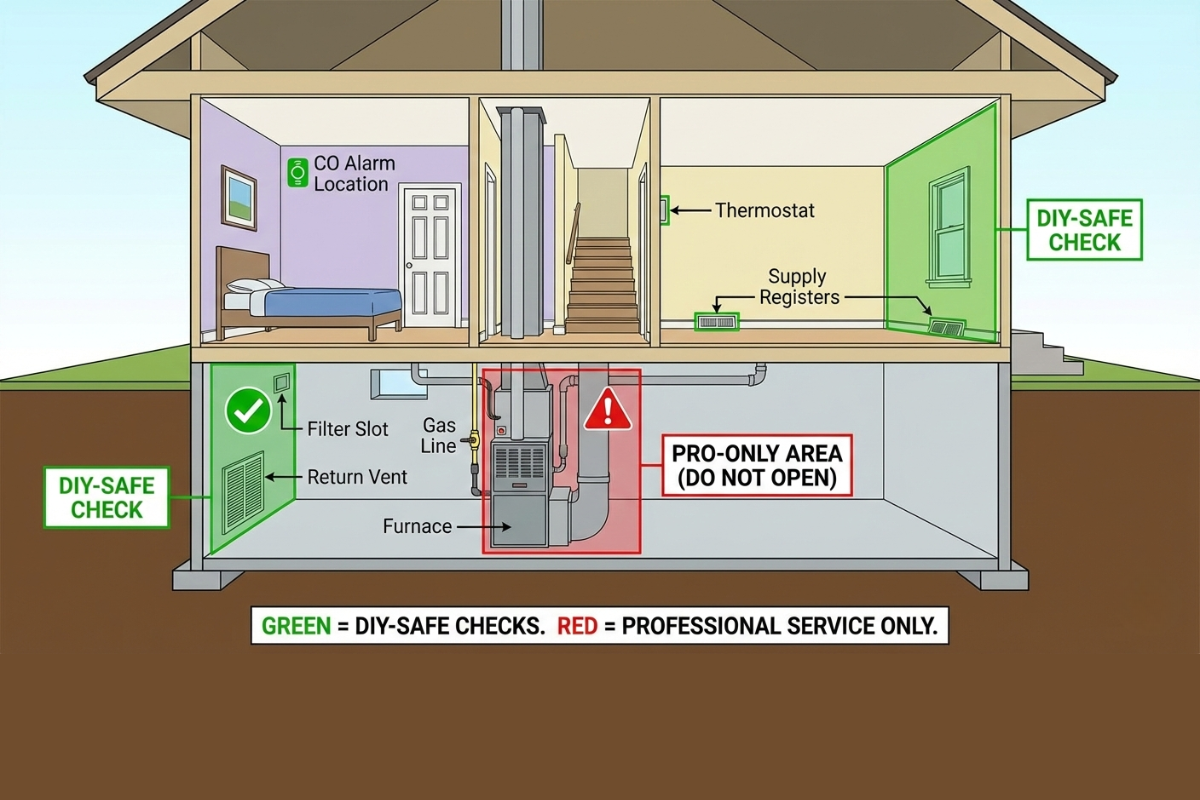
Diy-Safe Steps
- Test your CO alarms using the test button.
- Make sure supply and return vents are not blocked by rugs or furniture.
- Replace the filter only if you have the correct size and can access it without opening panels.
- Check thermostat batteries and settings (no wiring work).
Professional-Only Triggers
- Any gas odor, soot, or scorching marks
- CO alarm events
- Repeated breaker trips
- Persistent ignition problems
2. Energy Efficiency Tips
In Chicago winters, efficiency is not just about bills. It’s about consistent comfort when temperatures drop fast overnight.
For your furnace to make the most impact:
- Keep returns open so the system can “breathe”
- Keep filters from clogging during heavy heating months
- Avoid cranking the thermostat way up
- Keep doors and vents open for balanced airflow
Energy Star advises checking filters monthly during heavy-use months to prevent slowed airflow, the system from working harder, and energy waste.
3. Signs Your Furnace is Failing
When a furnace is failing, it shows noticeable signs before a total shutdown.
| What You Notice | Likely Reason | What You Do Next |
| Cold air from vents | Ignition or airflow issue | Check filter, then book service |
| Short cycling | Overheating or control issue | Check filter and thermostat basics |
| Loud banging | Delayed ignition or expansion noise | Call the experts |
| Burning smell that persists | Electrical overheating risk | Call the experts |
| Bills climbing fast | Efficiency drop | Schedule an inspection |
Seeing the signs? Scheduling a furnace inspection Chicago homeowners trust can help identify safety concerns, airflow problems, or ignition issues before they turn into emergency repairs.
Request same-day service and next-day appointments now.
4. Cleaning Furnace Components
Practicality dictates that homeowners only do fixes that are safe.
Diy-Safe Cleaning:
- Vacuum dust around return vents and front of the furnace
- Make sure registers are clear
- Wipe accessible exterior surfaces
Professional-Only Cleaning:
- Burners and combustion area
- Internal electrical compartments
- Internal blower components
If you’re seeing soot, corrosion, or anything that looks “burnt,” treat it as a safety concern and stop DIY.
5. Replacing Furnace Filters
A proper furnace filter replacement helps airflow, comfort, and system stability, especially during Chicago’s cold weeks.
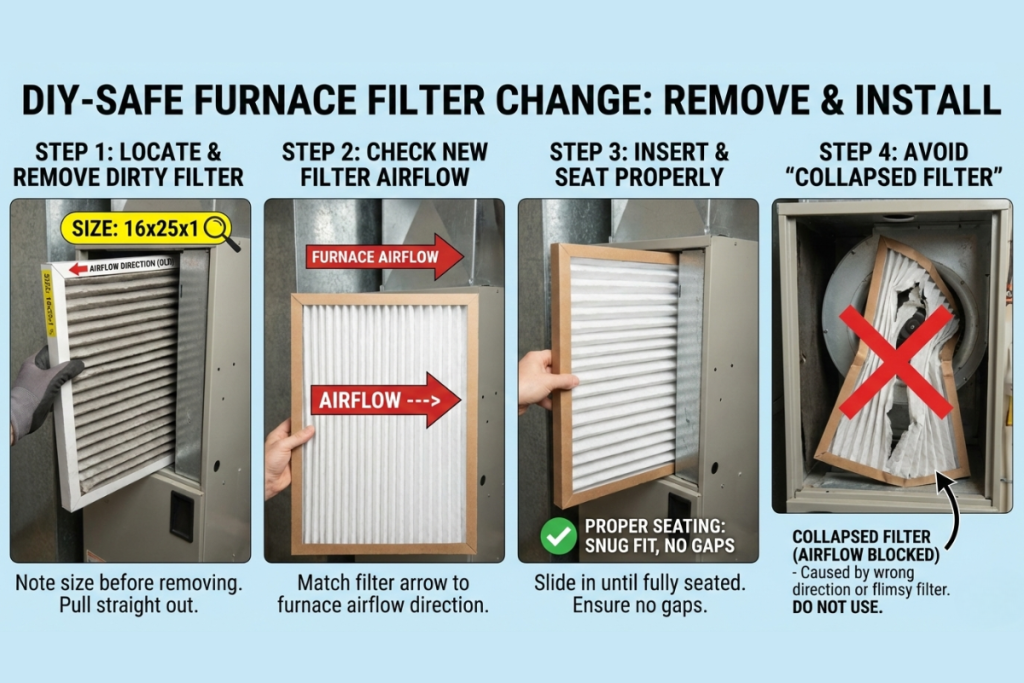
Safe filter steps:
- Turn the system off at the thermostat.
- Remove the old filter and note the size printed on the frame.
- Install the new filter with the airflow arrow pointing the same direction as the old one.
- Turn the system back on and listen for smoother airflow.
If your filter clogs unusually fast (like every few weeks), that’s often pointing to an airflow or dust source issue worth inspecting.
6. Troubleshooting Common Problems
Here’s the safe checklist to narrow down whether you can DIY a problem or if it requires a technician.
Step-by-step safe checks:
- Confirm the thermostat is set to Heat and the temperature is set above room temp.
- Replace thermostat batteries if it uses them.
- Make sure the filter is clean.
- Confirm at least a few supply and return vents are fully open.
- If your furnace has a clearly labeled reset switch that the manufacturer allows homeowners to use, follow the unit instructions only.
When to call a professional:
- The furnace keeps starting repeatedly
- The system trips breakers
- You hear unusual ignition noises
- Any CO alarm events or gas odors
7. Understanding Furnace Thermostats
Thermostats can make a furnace seem broken when it isn’t.
Definitions made simple:
Single-Stage
Runs at one heating level
Two-Stage:
Runs at a lower level first, then boosts when needed
Modulating:
Adjusts output in smaller steps for steadier comfort
Short Cycling:
The furnace turns on and off too often. That can be caused by airflow issues, control problems, or overheating protection.
If you’re thinking about a thermostat upgrade, wiring and compatibility checks can become a professional task in older Chicago homes.
8. Scheduling Regular Inspections
In Chicago, annual inspection timing matters. One pre-winter check can prevent the “no heat at 2 a.m.” call in January.
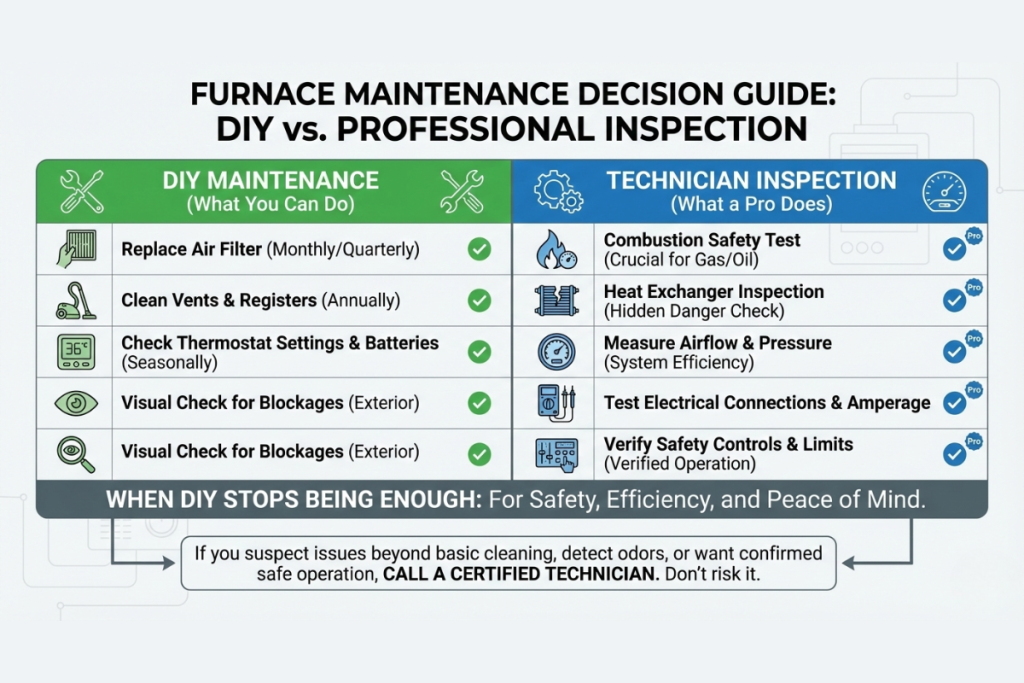
What a Technician Typically Checks:
- Combustion safety and venting condition
- Heat exchanger condition
- Airflow and temperature rise
- Ignition and electrical testing
- Filter fit and system static pressure indicators
This is where repairHVACnow helps most: we connect you with qualified local techs who can evaluate the system and explain the options clearly.
9. Cost of Repairs
Cost depends on what failed, how accessible the components are, and what safety testing is required. We never recommend guessing. We recommend diagnosing.
If your home has oil heat, homeowners also ask about oil furnace installation cost. That discussion is careful and inspection-based because venting, safety checks, and installation requirements can vary and should be handled by qualified professionals. ACCA’s quality installation guidance emphasizes documented, verifiable steps for proper HVAC installation, which is exactly what protects comfort and safety long term.
This is where the phrase furnace installation and repair is used in the real-world sense: sometimes it’s a repair that makes sense, sometimes it’s time to replace.
Don’t forget, neighborhoods like Lincoln Park, Logan Square, Wicker Park, and older bungalow zones across the Northwest Side often require venting upgrades when replacing older 80% furnaces with modern high-efficiency (90%+ AFUE) models.
What Affects Repair vs Replace Decisions:
- Age and repair frequency
- Major component failure patterns
- Safety concerns found during inspection
- Overall comfort stability in the home
Most Chicago furnace repairs fall between $250 – $900, depending on the failed component.
If you’re considering furnace replacement Chicago homeowners typically see total installation costs ranging from:
- $4,500 – $7,500 for standard efficiency models
- $6,500 – $10,000+ for high-efficiency systems with venting upgrades
Final pricing depends on home size, venting updates, permit requirements, and overall system configuration. The only way to know for sure is a professional diagnosis.
Book your estimate today.
10. Installation Walkthrough: What to Expect in Chicago
A professional furnace installation Chicago process should feel organized and clear, not rushed.
What a Good Installation Process Looks Like:
- In-home assessment of your complaints and system setup
- Equipment selection to match your home’s layout and airflow needs
- Removal and disposal of the old unit
- Professional setting and connections
- Venting and safety checks
- Startup testing and homeowner walkthrough
- Maintenance plan setup and filter guidance
Get Reliable Heat Back in Your Chicago Home Today
Chicago winters don’t give you much grace when heat fails. The smartest approach is a safe checklist first, then a professional inspection before minor issues turn into breakdowns. You get more stable temperatures, fewer surprise repairs, and better peace of mind for your family.
When you call repairHVACnow, here’s what happens:
- You tell us your symptoms and your location in the Chicago area
- We match you with a licensed, trained technicians
- You choose an available service appointment time
- The tech arrives, diagnoses the issue, and explains options clearly
- You approve the plan and get your heat back safely
