

If there’s one “small” thing that causes a surprising number of comfort complaints, it’s a neglected furnace filter. We walk into homes every winter where the heat feels weak, rooms heat unevenly, or allergies flare up the moment the furnace kicks on. Most of the time, the filter is either overdue or the wrong fit for the system.
This guide answers how often to change furnace filter in a way that actually matches real life, not a one-size-fits-all rule. We’ll show you what filters do, what changes the timeline, the warning signs homeowners miss, and what you can safely do today.
We’re repairHVACnow, and we connect local homeowners with licensed, trained, certified technicians who deal with this daily across cold-weather and mixed-climate regions.
Schedule your HVAC inspection today.
1. Understanding Furnace Filters and Their Purpose
What a Furnace Filter Actually Does
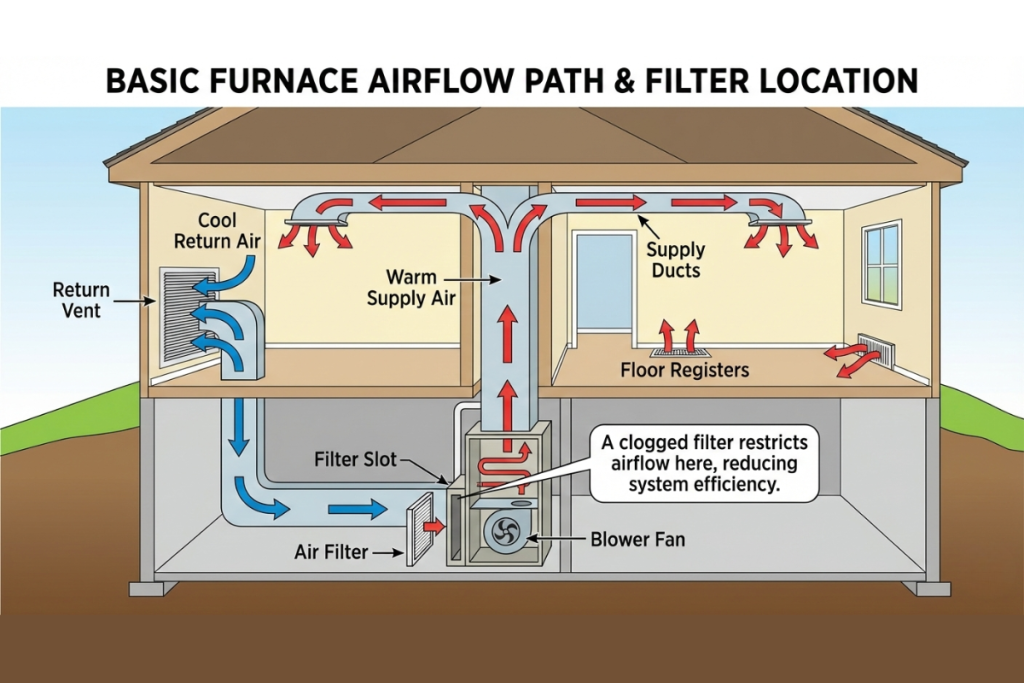
A furnace filter is basically your system’s “screen door.” It catches dust, lint, pet dander, and other floating debris before that stuff gets pulled into the blower and circulated through your home.
It also protects the equipment. When a filter loads up, airflow drops. Less airflow means your furnace has to run harder to move the same amount of warm air.
Why Filters Protect Both Air and Equipment
Your blower motor is built to move air. If it can’t, you can end up with louder operation, longer run times, and more wear than most homeowners realize. A filter is cheap. A stressed blower motor is not.
What You Can Do
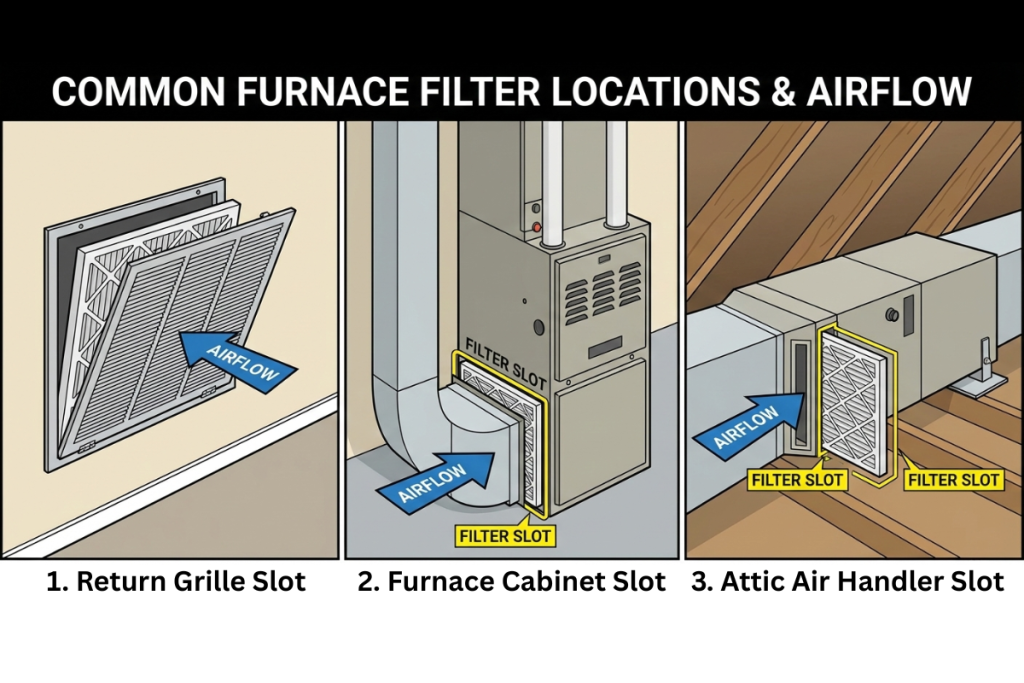
Locate your filter slot today (return grille, blower compartment, or near the furnace). If you’re not sure, snap a photo and keep it for reference.
2. Why Furnace Filter Maintenance Is Crucial
Health and Indoor Air Comfort Impacts
When filters are overloaded, more particles can stay in circulation inside the home. If you’ve got a family member with allergies or asthma, the difference can be noticeable. The EPA has consumer guidance on how furnace and HVAC filters help reduce particles in indoor air, while also noting filters don’t remove every pollutant.
This is also where homeowners start asking about the best furnace filter for allergies. The goal is better filtration without choking the system.
Energy Efficiency and Monthly Utility Costs
A dirty filter slows airflow. When airflow slows, your system can run longer to hit the same temperature. Energy Star specifically recommends checking filters monthly during heavy-use seasons and changing at least every 3 months, noting that dirty filters reduce airflow and waste energy.
3. How Often Should You Replace Your Furnace Filter?
Here’s the honest answer: it depends on the filter type and your household. If you want a safe baseline, start with the filter label, then adjust based on how your home actually lives.
General Replacement Timeline (Quick Table)
| Filter Type | Typical Lifespan | Who It’s Best For |
| Fiberglass (thin) | ~30 days | Light-use homes, low dust |
| Pleated (standard) | ~60–90 days | Most households |
| High-efficiency | varies | Homes needing stronger filtration |
This section also answers how long does a furnace filter last in plain terms: the “lasts” part changes with pets, dust, and how often the system runs.
If you’re trying to pin down when to change air filter in the middle of winter, don’t overthink it: if it looks dirty after a month of heavy heating use, change it.
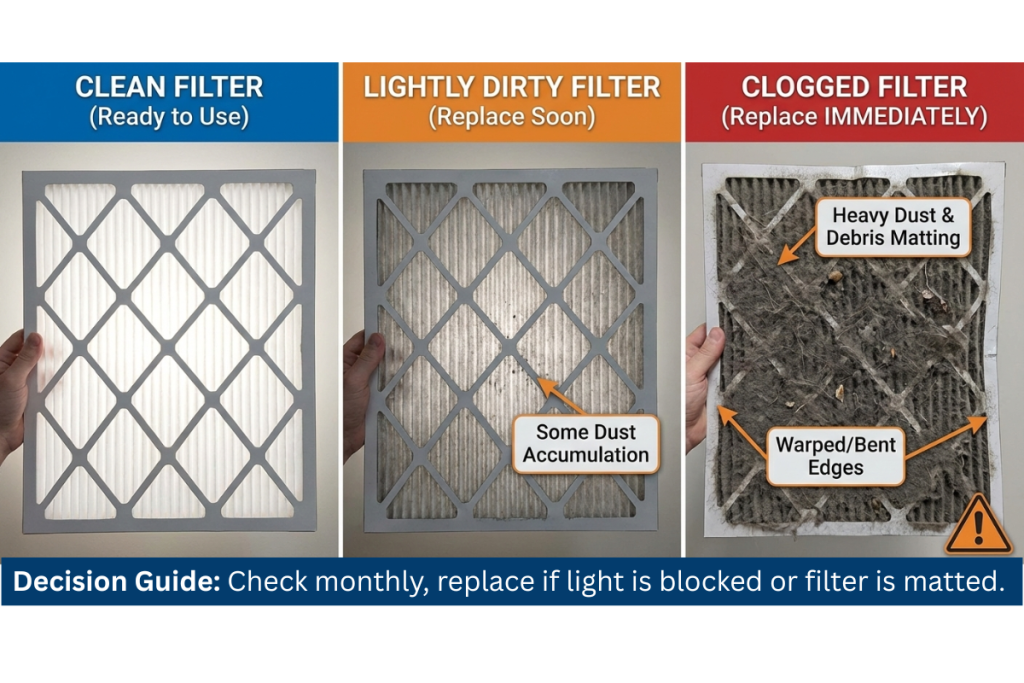
And if you prefer a rule you can remember, here’s a simple one: check monthly, replace when it’s visibly loaded, even if the calendar says you “should be fine.”
What You Can Do
Set a repeating reminder on your phone for a quick monthly filter check. It takes 60 seconds and can prevent bigger issues.
4. Factors That Affect Filter Replacement Frequency
Home and Lifestyle Factors
These are the real-world things that shorten filter life:
- Pets that shed
- More people in the home (more dust and lint)
- Smoking indoors
- Ongoing renovations or drywall dust
- Frequent cooking without strong ventilation
Local Climate and Seasonal Use
In the Northeast and upper Midwest, winter run time alone can load a filter fast. In the South, long cooling seasons do the same. In mixed climates, it’s often the spring pollen season that pushes homeowners over the edge.
5. Recognizing Signs Your Furnace Filter Needs Changing
Here are the homeowner symptoms we hear most often:
- Dust building up faster than usual on furniture
- Weak airflow at a few vents
- Some rooms feel colder than others
- Allergy flare-ups when the heat runs
- The furnace seems to cycle more often than it used to
If you ignore these signs, you can end up with overheating issues, more wear on the blower, and comfort problems that feel like “the furnace is failing” when it’s really just airflow being strangled.
For system performance, the DOE notes that dirty or clogged filters can dramatically reduce airflow and increase run time and wear, which is exactly why filter access and frequent replacement matter.
What You Can Do
Inspect the filter within 24 hours if you’re seeing any of the symptoms above. If airflow is severely restricted, do not “let it ride.”
6. Exploring the Different Types of Furnace Filters
Common Filter Types Explained Simply
There are several types of furnace filters you’ll run into:
Fiberglass
Thin, inexpensive filters that provide basic particle capture and minimal airflow resistance.
Pleated
The most common option; increased surface area allows better capture of dust and allergens.
Washable
Reusable filters that can save money over time, though performance depends on maintenance and build quality.
Higher-Efficiency Filters
Designed to trap smaller particles like pollen and fine dust, improving overall air quality.
Homeowners often ask about HEPA furnace filters because HEPA is associated with strong filtration. They can be great in the right setup, but they can also create too much resistance in systems not designed for them.
ASHRAE explains that increasing filter efficiency can increase pressure drop, which can reduce airflow and potentially increase energy use if the system has to compensate.
Which Filter Fits Which Home
Allergies
Stronger filtration can help reduce allergens, as long as airflow isn’t overly restricted.
Pets
Pet hair and dander cause filters to clog faster, regardless of the filter type used.
Older systems
Often need a balanced filter choice to improve air quality without limiting airflow.
7. What Happens When Furnace Filters Are Ignored and How to Prevent It
System Damage, Safety, and Comfort Risks
When airflow drops far enough, heat can build up where it shouldn’t. That extra heat stresses internal components and can shorten equipment life. We’ve seen “mystery” heating problems disappear immediately after correcting a filter issue and restoring proper airflow through timely furnace filters replacement.
A severely clogged filter can lead to:
- Reduced heat output
- More frequent system cycling
- Overheating-related shutdowns
- Emergency breakdowns during the coldest week of the year
What often feels like a failing furnace is really an airflow problem caused by delayed furnace filters replacement that’s been quietly building over time.
How to Slow Filter Buildup (Safe, DIY-Friendly Habits)
You can’t make a filter last forever, but a few simple habits can help it load more predictably and reduce unnecessary strain on your system between furnace filters replacement intervals:
- Vacuum and wipe around return vents (dust accumulates there quickly)
- Keep supply vents open and unobstructed
Use kitchen and bathroom exhaust fans when cooking or showering - Limit dust spread during projects, heavy sweeping, or renovations
These steps help keep your furnace filters replacement schedule consistent instead of turning into a surprise mid-season problem.
8. Choosing the Right Furnace Filter for Your Home
Balancing Filtration and Airflow
A higher rating is not automatically better if it chokes airflow. The “right” filter is one that improves capture while still letting your system breathe. This is where many homeowners accidentally create new comfort issues while trying to solve allergies.
When to Call a Professional
Call a technician if:
- You keep changing filters but airflow still feels weak
- You’re unsure what filter size or thickness your system needs
- You want to upgrade filtration but don’t know if your system can handle it
- You notice unusual noise, cycling, or persistent uneven heating
What You Can Do
Call repairHVACnow for same-day service if you’re stuck choosing between better filtration and proper airflow, get a quick system check. A good tech will explain it in plain language.
Furnace Filter Replacement Cost and What to Expect
Homeowners ask about furnace filter replacement cost because they want to budget without getting surprised. The reality is: the filter itself varies by type and size, and the “cost” can also include a quick inspection if there are airflow complaints.
We keep this simple: it’s usually more cost-effective to stay ahead of filter changes than to pay for avoidable service calls caused by restricted airflow.
What You Can Do
Keep a spare filter on hand during peak season. It’s one of the easiest ways to avoid late-night problems when stores are closed.
Get Ahead of Filter Problems Before They Turn Into No-Heat Calls
If you want a clear plan that protects comfort, air quality, and your equipment, don’t wait for a weak-airflow problem to become a breakdown. Most homeowners are shocked how much smoother a system runs when the filter and airflow are handled correctly.
When you call repairHVACnow, here’s what happens:
- We schedule a convenient service appointment
- We connect you with a licensed, trained, certified technician in your area
- The technician checks your filter fit and airflow safely
- We confirm the correct filter choice and next replacement timing for your home
Request an appointment today and restore clean, safe airflow to your home.
