

Why Your Furnace Won’t Start
Cold winter nights are usually when problems show up first. A furnace that clicks but never fires. A system that tries to start and shuts down immediately. Or a home that stays cold no matter how high the thermostat is set. These are some of the most common symptoms homeowners notice when a furnace won’t start or the issue of a furnace not igniting appears.
In many cases, the root cause is a small but critical safety component called the furnace pressure switch. This part is designed to protect your home and family, but when it detects a problem, it will stop the furnace from operating entirely.
At repairHVACnow, we regularly help homeowners identify whether a pressure switch issue is something simple, something dangerous, or something that requires immediate professional service. This guide explains what you can safely check, what you should never bypass, and when to stop and call a licensed technician.
Call repairHVACnow for same-day service if your furnace is not starting and temperatures are dropping.
What Is a Furnace Pressure Switch?
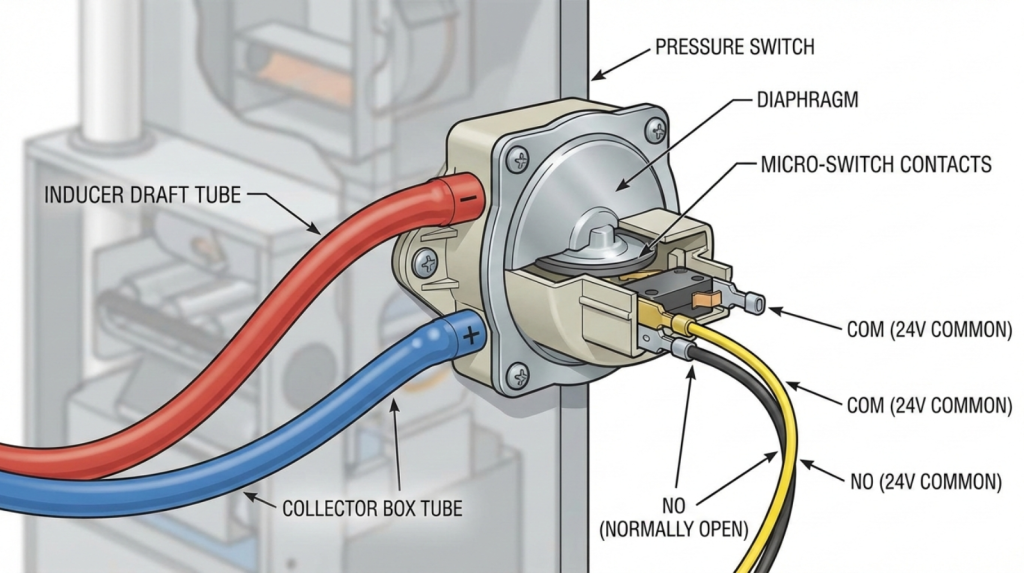
A furnace pressure switch is a safety device that confirms your furnace is venting exhaust gases properly before ignition. It ensures harmful gases like carbon monoxide can exit your home safely.
This component is part of the furnace safety switch system. If the switch does not sense proper airflow through the vent, it prevents the burners from lighting.
What it monitors:
- Draft created by the inducer motor
- Clear venting pathways
- Safe exhaust flow
If it fails or detects an issue:
- The furnace will not ignite
- The system may short cycle
- The furnace may lock out entirely
Note symptoms carefully before attempting any DIY steps.
Why Furnace Pressure Switches Fail
Most gas furnace pressure switch issues are not caused by the switch itself. They are often triggered by airflow or venting problems elsewhere in the system.
Common causes include:
- Blocked or partially blocked exhaust vents
- Ice, snow, or debris buildup outdoors
- Moisture trapped in pressure tubing
- Cracked or brittle rubber hoses
- Draft inducer motor issues
These problems fall under common furnace venting problems and are especially common during cold, windy, or snowy conditions. We suggest only performing a visual vent check and not disassembling components.
| Common Cause | What Homeowners Notice | Risk Level |
| Vent blockage | Furnace shuts off quickly | High |
| Moisture buildup | Intermittent heat | Medium |
| Failed switch | No ignition at all | High |
Safety Precautions Before Testing
Any DIY furnace repair involving safety switches must be approached carefully. Furnaces involve gas, electricity, and combustion gases.
Before doing anything:
- Turn off electrical power to the furnace
- Shut off the gas supply if instructed by the manufacturer
- Allow components to cool
- Wear gloves and eye protection
Never attempt to bypass a safety switch. Doing so can expose your household to carbon monoxide or fire risk. If you feel unsure at any point, stop and call a professional.
Tools Needed to Check a Pressure Switch
Testing a pressure switch requires basic tools, but not everyone should proceed.
Typical tools include:
- Multimeter (for continuity testing)
- Flashlight
- Screwdriver
- Furnace owner’s manual
These steps fall under general HVAC maintenance tips and are meant for inspection only, not modification. Decide honestly whether you are comfortable using these tools safely.
Step-by-Step Guide to Testing a Furnace Pressure Switch
This section is for educational purposes only and part of responsible gas furnace troubleshooting.
Step 1: Power off the Furnace
Turn off power at the switch or breaker.
Step 2: Locate the Pressure Switch
It is usually a round component with wires and rubber tubing connected.
Step 3: Inspect Tubing
Check for cracks, moisture, or disconnections. Do not replace parts yet.
Step 4: Check Venting
Look outside for obstructions. Clear snow or debris only if easily accessible.
Step 5: Test Continuity
Using a multimeter, check whether the switch closes when the inducer motor runs.
Step 6: Restore Power and Observe
If readings are unclear, do not guess.
These steps fall within limited DIY furnace repair. Do not attempt electrical rewiring or part replacement. Schedule your HVAC inspection today if results are confusing or inconsistent.
Interpreting Pressure Switch Test Results
Understanding results helps you decide next steps. Keep in mind that these results are still not a full diagnosis.
- Continuity present:
This indicates the pressure switch is closing properly when the inducer motor runs, confirming adequate draft and correct switch operation.
- No continuity:
It is likely that the pressure switch is not closing; however, further inspection is required before condemning the switch. Other factors may also be contributing to the issue.
- Intermittent readings:
Airflow or moisture-related problems may be causing the switch to open and close unpredictably.
At repairHVACnow, we have put together this information for homeowners as a basic furnace repair guide, but we must remind you that it does not replace professional diagnosis. That’s why, you must only use results to decide when to call for service.
Common Pressure Switch Problems and Fixes
| Problem | Safe DIY Check | Technician Solution |
| Clogged vent | Visual inspection | Professional vent cleaning |
| Moisture in tubing | Dry tubing | Reroute or replace tubing |
| Failed switch | None | Switch replacement |
Issues like furnace not igniting or repeated shutdowns often return if underlying venting problems are not addressed. That does not mean parts should be replaced without proper certification.
When to Call a Professional HVAC Technician
Call a professional immediately if:
- the furnace won’t start after testing
- you smell gas or exhaust
- the system locks out repeatedly
- the furnace shuts down during cold nights
Licensed, trained, and certified technicians understand regional winter conditions and combustion safety. Request an appointment with repairHVACnow to connect with a local expert who can diagnose the issue safely.
Tips to Prevent Future Pressure Switch Issues
Preventive care reduces emergency calls.
Helpful HVAC maintenance tips include:
- Annual professional inspections
- Keeping exhaust vents clear
- Changing filters regularly
- Scheduling maintenance before winter
Simply, book annual maintenance to avoid surprise shutdowns.
Frequently Asked Questions
Can I bypass a furnace pressure switch?
No. Bypassing a safety switch is dangerous and can cause serious harm.
Are pressure switches expensive?
The part itself is usually affordable, but labor depends on the root cause.
Can venting problems cause repeated shutdowns?
Yes. Venting issues are one of the most common triggers.
Get Safe, Reliable Furnace Help
When you call repairHVACnow, here is what happens:
- You describe your furnace issue
- We connect you with a licensed local technician
- A professional inspection is scheduled
- Safe, code-compliant repairs are completed
Do not risk your comfort or your family’s safety during winter. Call now to book your inspection. Schedule service today for peace of mind and reliable heat.
